
Overview
Measles is a highly contagious viral infection that mainly affects children but can occur at any age. It is caused by the measles virus and spreads easily through respiratory droplets when an infected person coughs or sneezes. Despite being preventable through vaccination, measles remains a significant public health concern in many parts of the world.
The infection typically starts with mild symptoms and progresses to a characteristic skin rash. Measles can be serious, especially in young children, pregnant women, and people with weakened immune systems.
Symptoms
Symptoms usually appear 7 to 14 days after exposure to the virus and develop in stages.
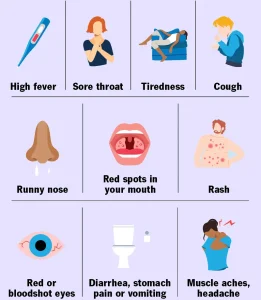
Common symptoms include:
-
High fever
-
Runny nose
-
Cough
-
Red, watery eyes
-
Sore throat
-
Fatigue
A few days later, a red, blotchy rash appears, usually starting on the face and spreading downward to the rest of the body. Small white spots inside the mouth may appear before the rash.
Causes
Measles is caused by infection with the measles virus.
Key causes include:
-
Direct contact with an infected person
-
Breathing in virus-containing droplets from coughs or sneezes
-
Touching contaminated surfaces and then touching the face
The virus can remain active in the air or on surfaces for several hours, making it extremely contagious.
Risk factors
Certain factors increase the likelihood of getting measles or developing severe illness.
Risk factors include:
-
Not being vaccinated
-
Living in or traveling to areas with low vaccination coverage
-
Weak immune system
-
Vitamin A deficiency
-
Close contact with infected individuals
Infants too young to be vaccinated are also at higher risk.
Complications
Measles can lead to serious complications, particularly in vulnerable populations.
Possible complications include:
-
Ear infections
-
Diarrhea
-
Pneumonia
-
Encephalitis
-
Vision loss
-
Severe dehydration
In rare cases, measles can be fatal, especially in young children.
Prevention
Measles is largely preventable through effective vaccination and public health measures.
Preventive steps include:
-
Receiving the measles, mumps, and rubella vaccine as recommended
-
Ensuring children complete their full vaccination schedule
-
Avoiding close contact with infected individuals
-
Practicing good respiratory hygiene
-
Supporting community-wide immunization programs
Vaccination is the most effective way to prevent measles and its potentially serious complications.
Advertisement
