
Overview
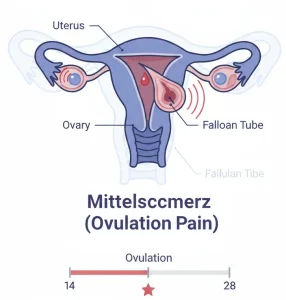
Mittelschmerz is a medical term used to describe ovulation pain that occurs in some people during the middle of the menstrual cycle. The word comes from German, meaning “middle pain.” It typically happens around 10 to 14 days before the start of the next menstrual period, when an ovary releases an egg.
Mittelschmerz is usually harmless and short-lived. It can occur on one side of the lower abdomen and may switch sides from month to month, depending on which ovary releases the egg.
Symptoms
Symptoms of mittelschmerz vary in intensity and duration, ranging from mild discomfort to sharp pain.
Common symptoms include:
-
Lower abdominal pain on one side
-
Pain that may feel dull, aching, or sharp
-
Discomfort lasting from a few minutes to several hours
-
Mild spotting or light vaginal bleeding
-
Increased vaginal discharge
-
Sensation of pressure or cramping in the pelvis
The pain usually resolves on its own without treatment.
Causes
Mittelschmerz occurs as a normal part of ovulation and is linked to changes in the ovary during egg release.
Possible causes include:
-
Stretching of the ovarian surface when the egg is released
-
Irritation of the abdominal lining by fluid or blood released from the ovary
-
Contraction of the fallopian tube as it moves the egg
-
Sensitivity to hormonal changes during ovulation
Not everyone experiences ovulation pain, and the exact cause may vary between individuals.
Risk Factors
Certain factors may increase the likelihood of experiencing mittelschmerz.
Key risk factors include:
-
Being of reproductive age
-
Regular ovulatory menstrual cycles
-
Sensitivity to hormonal fluctuations
-
History of ovulation-related pelvic pain
Mittelschmerz is not associated with underlying disease in most cases.
Complications
Mittelschmerz itself does not cause long-term complications and is not considered a serious medical condition.
However, complications may arise if the pain is mistaken for another condition. These may include:
-
Delayed diagnosis of conditions such as appendicitis or ovarian cysts
-
Anxiety due to recurrent pelvic pain
Severe, persistent, or unusual pain should always be evaluated by a healthcare provider.
Prevention
Mittelschmerz cannot always be prevented, but its occurrence and discomfort may be reduced.
Preventive strategies include:
-
Tracking the menstrual cycle to anticipate ovulation
-
Using over-the-counter pain relief when recommended
-
Applying heat to the lower abdomen
-
Discussing hormonal birth control options with a healthcare provider if pain is severe or disruptive
Understanding ovulation patterns can help distinguish mittelschmerz from other causes of pelvic pain and reduce concern.
Advertisement
