
Overview
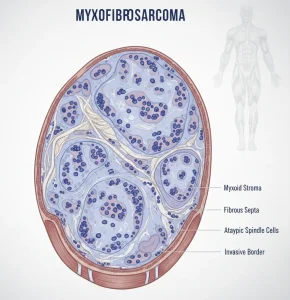
Myxofibrosarcoma is a rare type of soft tissue sarcoma that develops from connective tissues, most commonly affecting the arms and legs. It usually occurs in older adults and is characterized by slow-growing tumors that may appear painless in the early stages.
Although myxofibrosarcoma often grows slowly, it has a tendency to recur locally after treatment and, in some cases, spread to other parts of the body. Early diagnosis and careful long-term follow-up are important for effective management.
Symptoms
Symptoms depend on the size and location of the tumor and may progress gradually.
Common symptoms include:
-
A painless or mildly painful soft tissue lump
-
Swelling that increases over time
-
Firm or rubbery mass under the skin
-
Pain or discomfort if the tumor presses on nerves or muscles
-
Reduced movement near the affected area in advanced cases
Early tumors may go unnoticed and are often discovered incidentally.
Causes
The exact cause of myxofibrosarcoma is not fully understood. It arises from abnormal growth of fibroblastic cells within connective tissue.
Possible contributing factors include:
-
Genetic changes within soft tissue cells
-
Previous radiation therapy to the affected area
-
Accumulation of mutations with aging
In most cases, no clear cause can be identified.
Risk Factors
Certain factors may increase the risk of developing myxofibrosarcoma.
Risk factors include:
-
Older age, particularly over 50 years
-
History of radiation exposure
-
Previous soft tissue tumors
-
Genetic susceptibility, in rare cases
The condition affects both men and women, with a slightly higher occurrence in older adults.
Complications
Myxofibrosarcoma can lead to complications, especially if not treated promptly or adequately.
Possible complications include:
-
Local recurrence after surgical removal
-
Spread to nearby tissues
-
Metastasis to lungs or other organs in advanced stages
-
Pain and functional impairment
-
Need for repeated surgeries or long-term treatment
Close monitoring after treatment is essential due to the high recurrence rate.
Prevention
There is no proven way to prevent myxofibrosarcoma. However, early detection and appropriate management can improve outcomes.
Preventive and supportive measures include:
-
Regular medical evaluation of unexplained or growing soft tissue lumps
-
Prompt imaging and biopsy of suspicious masses
-
Avoiding unnecessary radiation exposure when possible
-
Adhering to follow-up schedules after treatment
-
Maintaining overall health to support recovery
Early diagnosis, proper surgical management, and ongoing follow-up play a key role in reducing complications and improving long-term prognosis for individuals with myxofibrosarcoma.
Advertisement
