
Overview
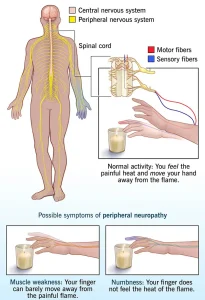
Peripheral neuropathy is a condition that occurs when the peripheral nerves, which carry signals between the brain, spinal cord, and the rest of the body, become damaged. These nerves control sensations such as touch and pain, muscle movements, and some automatic body functions.
When peripheral nerves are injured or diseased, communication between the brain and the body is disrupted. This can lead to symptoms such as numbness, tingling, weakness, and pain, usually starting in the hands or feet. In many cases, symptoms gradually spread upward in the limbs.
Peripheral neuropathy can develop due to many different causes, including medical conditions, infections, injuries, or exposure to toxins. The severity can vary widely, from mild discomfort to significant loss of sensation or muscle control.
Symptoms
The symptoms of peripheral neuropathy depend on which nerves are affected. It commonly begins in the feet and legs and may later affect the hands and arms.
Common symptoms include:
-
Gradual numbness or reduced ability to feel pain or temperature changes
-
Tingling or prickling sensations
-
Burning or sharp pain
-
Increased sensitivity to touch
-
Muscle weakness
-
Loss of coordination and balance
-
Difficulty walking
-
Muscle cramps or twitching
-
Loss of reflexes
If autonomic nerves are affected, additional symptoms may include:
-
Changes in blood pressure
-
Digestive problems
-
Excessive or reduced sweating
-
Difficulty controlling bladder function
Symptoms may develop slowly over time or appear more suddenly depending on the cause.
Causes
Peripheral neuropathy can result from many underlying conditions that damage the nerves.
Common causes include:
-
Diabetes, which is one of the most frequent causes
-
Physical injuries or trauma to nerves
-
Infections such as viral or bacterial illnesses
-
Autoimmune diseases that attack nerve tissue
-
Exposure to toxins or certain chemicals
-
Alcohol misuse
-
Vitamin deficiencies, especially vitamin B12
-
Certain medications, including some chemotherapy drugs
-
Inherited neurological disorders
In some cases, the exact cause cannot be identified, and the condition is referred to as idiopathic neuropathy.
Risk Factors
Several factors may increase the risk of developing peripheral neuropathy.
These include:
-
Diabetes or poorly controlled blood sugar
-
Chronic kidney or liver disease
-
Excessive alcohol consumption
-
Vitamin deficiencies
-
Exposure to toxic substances
-
Certain infections
-
Family history of nerve disorders
-
Increasing age
Managing these risk factors can help reduce the likelihood of nerve damage.
Complications
If peripheral neuropathy progresses, it can lead to complications that affect daily life and overall health.
Possible complications include:
-
Injuries due to reduced sensation in the feet or hands
-
Infections from unnoticed wounds or ulcers
-
Balance problems and increased risk of falls
-
Muscle weakness that interferes with mobility
-
Chronic nerve pain
-
Foot deformities in severe cases
Proper management and regular medical care can help prevent many of these complications.
Prevention
Preventing peripheral neuropathy often involves controlling the conditions that can damage nerves and maintaining overall nerve health.
Helpful preventive steps include:
-
Managing diabetes and maintaining stable blood sugar levels
-
Eating a balanced diet rich in essential vitamins
-
Limiting or avoiding alcohol consumption
-
Exercising regularly to improve circulation and nerve health
-
Protecting the hands and feet from injuries
-
Avoiding exposure to harmful chemicals and toxins
-
Seeking medical care for infections or injuries that may affect nerves
Adopting healthy lifestyle habits and addressing underlying health conditions early can significantly reduce the risk of developing peripheral neuropathy.
Advertisement
