
Overview
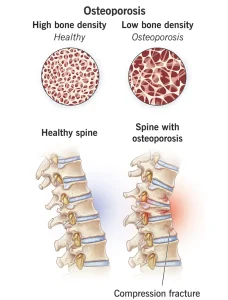
Osteoporosis is a progressive bone disease characterized by decreased bone density and weakened bone structure, which increases the risk of fractures. It often develops silently over many years and is most common in older adults, especially postmenopausal women. Bones most frequently affected include the spine, hips, and wrists.
Symptoms
Osteoporosis is often called a “silent disease” because bone loss occurs gradually. Symptoms may appear only after fractures occur:
-
Back pain, often due to spinal fractures
-
Loss of height over time
-
Stooped posture (kyphosis)
-
Fractures that occur with minor injuries or falls
-
Weak or brittle bones
Causes
Osteoporosis develops when the creation of new bone does not keep up with the loss of old bone. Contributing factors include:
-
Aging and natural bone loss
-
Hormonal changes, especially decreased estrogen in women
-
Deficiency of calcium or vitamin D
-
Sedentary lifestyle
-
Certain medications such as corticosteroids
-
Medical conditions affecting bone metabolism, like hyperthyroidism
Risk Factors
Factors that increase the risk of osteoporosis include:
-
Advanced age
-
Female gender
-
Family history of osteoporosis or fractures
-
Low body weight or small frame
-
Smoking and excessive alcohol consumption
-
Lack of physical activity
-
Poor nutrition with low calcium or vitamin D intake
Complications
Osteoporosis can lead to serious health issues:
-
Fragile bones prone to fractures
-
Hip fractures, which may require surgery and lead to reduced mobility
-
Vertebral fractures causing chronic pain and spinal deformity
-
Loss of independence due to mobility limitations
-
Increased risk of complications and mortality following fractures
Prevention
Preventive measures focus on strengthening bones and maintaining bone health:
-
Consuming a calcium- and vitamin D-rich diet
-
Engaging in regular weight-bearing and muscle-strengthening exercises
-
Avoiding smoking and limiting alcohol intake
-
Monitoring bone density through regular check-ups
-
Using medications or supplements when prescribed for bone health
-
Fall prevention strategies to reduce fracture risk
Advertisement
