
Overview
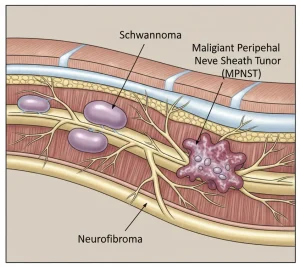
Peripheral nerve tumors are abnormal growths that develop in or around the nerves outside the brain and spinal cord. These nerves are part of the peripheral nervous system and are responsible for transmitting signals that control movement, sensation, and certain body functions.
Most peripheral nerve tumors are benign, meaning they are not cancerous and tend to grow slowly. However, some tumors can be malignant and may spread to surrounding tissues. These tumors can form within the nerve itself or in the protective tissue surrounding the nerve.
Depending on their location and size, peripheral nerve tumors may press on nearby nerves and tissues, causing pain, weakness, or loss of function. Early diagnosis is important to determine whether the tumor is benign or malignant and to plan appropriate treatment.
Symptoms
Symptoms of peripheral nerve tumors often depend on the size and location of the tumor. In some cases, small tumors may not cause noticeable symptoms until they grow larger.
Common symptoms include:
-
A noticeable lump or swelling under the skin
-
Pain in the affected area
-
Tingling or burning sensations
-
Numbness or loss of sensation
-
Muscle weakness in the affected limb
-
Loss of coordination or balance
-
Pain that worsens with pressure on the tumor
If the tumor presses significantly on a nerve, it may lead to more severe nerve-related symptoms such as weakness or loss of movement.
Causes
The exact cause of most peripheral nerve tumors is not always known. These tumors develop when cells that make up the nerve or its protective covering begin to grow abnormally.
Certain genetic conditions are associated with a higher likelihood of developing peripheral nerve tumors. In many cases, the tumors arise from the protective layers surrounding nerves, such as the Schwann cells.
Peripheral nerve tumors may occur spontaneously without a clear trigger, although genetic and environmental factors may play a role.
Risk Factors
Some individuals have a higher risk of developing peripheral nerve tumors due to genetic conditions or other factors.
Risk factors may include:
-
Genetic disorders such as neurofibromatosis
-
Family history of nerve tumors
-
Previous radiation exposure
-
Certain inherited syndromes affecting nerve tissue
People with inherited nerve disorders may develop multiple tumors over time.
Complications
If peripheral nerve tumors grow large or affect important nerves, they can lead to complications that impact nerve function and overall health.
Possible complications include:
-
Chronic nerve pain
-
Progressive numbness or tingling
-
Muscle weakness or loss of movement
-
Permanent nerve damage
-
Difficulty performing daily activities
-
Spread of cancer if the tumor is malignant
Early treatment can help prevent permanent nerve damage and improve outcomes.
Prevention
There is no guaranteed way to prevent peripheral nerve tumors, especially when they are linked to genetic conditions. However, some general health measures may help reduce certain risks.
Helpful steps include:
-
Regular medical checkups, especially for individuals with genetic conditions linked to nerve tumors
-
Monitoring any unusual lumps or persistent nerve-related symptoms
-
Avoiding unnecessary radiation exposure when possible
-
Seeking medical evaluation if pain, numbness, or weakness develops without a clear cause
Early detection and timely medical care can help manage peripheral nerve tumors more effectively and reduce the risk of complications.
Advertisement
