
Overview
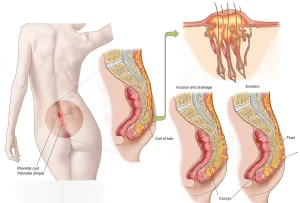
Sacral Dimple is a small indentation or pit in the skin located just above the crease between the buttocks, near the lower back. It is a common congenital condition, meaning it is present at birth. In most cases, a sacral dimple is harmless and does not cause any health problems.
Simple sacral dimples are typically small, shallow, and located close to the anus. However, in rare cases, a sacral dimple may be associated with underlying spinal abnormalities, such as spina bifida occulta or tethered cord syndrome. Because of this possibility, newborns with certain high-risk features may require further evaluation.
Most sacral dimples do not require treatment and do not affect a child’s growth or development.
Symptoms
A sacral dimple is usually painless and does not cause symptoms. It is often noticed during a routine newborn examination.
Features of a simple sacral dimple may include:
-
A small indentation in the lower back
-
Located within 2.5 centimeters of the anus
-
Shallow and easily visible
-
No associated swelling or drainage
Signs that may suggest an underlying spinal issue include:
-
A large or deep dimple
-
A dimple located higher on the back
-
A tuft of hair near the dimple
-
Skin discoloration or a fatty lump
-
Drainage of fluid or pus
-
Weakness in the legs
-
Abnormal reflexes
-
Problems with bladder or bowel control
If any of these concerning signs are present, further medical evaluation is necessary.
Causes
Sacral dimples develop during early fetal development when the spine and surrounding tissues are forming. The exact cause is not fully understood.
In most cases, the dimple is simply a minor variation in skin development and is not linked to any spinal problem. However, in rare instances, incomplete closure of the neural tube during early pregnancy may result in underlying spinal abnormalities.
Sacral dimples are not caused by anything the parents did during pregnancy.
Risk Factors
Most sacral dimples occur without known risk factors. However, the likelihood of associated spinal abnormalities may increase if:
-
The dimple is large or deep
-
It is located higher on the back
-
There are additional skin abnormalities nearby
-
There is a family history of neural tube defects
-
The baby has other congenital abnormalities
Neural tube defects may also be linked to low folic acid intake during pregnancy.
Complications
Simple sacral dimples usually do not cause complications. However, if associated with an underlying spinal defect, potential complications may include:
-
Tethered spinal cord
-
Weakness or numbness in the legs
-
Difficulty walking
-
Bladder or bowel dysfunction
-
Recurrent infections if there is an open tract
Early detection of spinal abnormalities allows timely treatment and reduces the risk of long-term complications.
Prevention
There is no guaranteed way to prevent sacral dimples, as they occur during early development before birth.
However, certain measures may reduce the risk of neural tube defects:
-
Adequate folic acid intake before and during early pregnancy
-
Regular prenatal care
-
Managing maternal health conditions
-
Avoiding harmful substances during pregnancy
Most sacral dimples are harmless and require no treatment. Parents should consult a healthcare provider if the dimple appears unusual or if the child develops neurological symptoms. Early evaluation ensures proper monitoring and peace of mind.
Advertisement
