
Overview
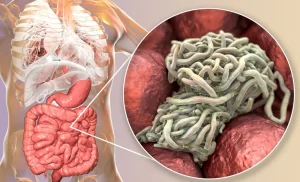
Pinworm infection is a common intestinal infection caused by small parasitic worms called pinworms. The scientific name of this parasite is Enterobius vermicularis. These tiny, white worms usually live in the large intestine and rectum of infected individuals.
Pinworm infection is most common in children but can affect people of all ages. The infection spreads easily in places where people live or spend time together, such as homes, schools, and daycare centers. It occurs when microscopic pinworm eggs are accidentally swallowed or inhaled.
Although the infection is usually not serious, it can cause uncomfortable symptoms, particularly itching around the anus. With proper treatment and hygiene measures, pinworm infections can be effectively treated and prevented from spreading.
Symptoms
Many people with pinworm infection may not show symptoms, but others may experience discomfort caused by the worms laying eggs around the anus, usually at night.
Common symptoms include:
-
Intense itching around the anus, especially at night
-
Disturbed sleep due to itching
-
Irritability or restlessness
-
Abdominal discomfort
-
Nausea in some cases
-
Visible small white worms around the anal area or in stool
-
Skin irritation or rash from scratching
In girls, the worms may sometimes spread to the vaginal area and cause itching or irritation.
Causes
Pinworm infection occurs when pinworm eggs enter the body through the mouth. This usually happens after touching contaminated surfaces or objects and then touching the mouth.
Common sources of infection include:
-
Contaminated hands or fingernails
-
Bedding, clothing, or towels containing pinworm eggs
-
Toys or household surfaces
-
Inhalation of airborne eggs in dusty environments
After the eggs are swallowed, they hatch in the small intestine and mature in the large intestine. Female worms then travel to the anal area at night to lay eggs, which causes itching and helps spread the infection.
Risk Factors
Certain factors can increase the risk of developing pinworm infection.
Risk factors include:
-
Being a young child
-
Living in crowded environments
-
Close contact with infected individuals
-
Poor hand hygiene
-
Nail biting or thumb sucking
-
Sharing bedding or clothing with infected individuals
Family members of an infected person often have a higher risk of infection due to close contact.
Complications
Pinworm infections are usually mild, but complications may occur if the infection persists or spreads.
Possible complications include:
-
Skin irritation or infection from excessive scratching
-
Sleep disturbances
-
Secondary bacterial infections of the skin
-
Vaginal infections in females if worms spread to that area
-
Abdominal discomfort in rare cases
These complications are generally uncommon and can usually be prevented with proper treatment.
Prevention
Preventing pinworm infection mainly involves maintaining good hygiene and preventing the spread of eggs.
Helpful preventive measures include:
-
Washing hands thoroughly with soap and water, especially after using the toilet and before eating
-
Keeping fingernails short and clean
-
Avoiding nail biting and thumb sucking
-
Bathing regularly, especially in the morning
-
Washing bedding, clothing, and towels frequently in hot water
-
Cleaning household surfaces and toys regularly
-
Encouraging children to practice proper hygiene habits
Treating all household members at the same time may also help prevent reinfection and control the spread of pinworms.
Advertisement
