
Overview
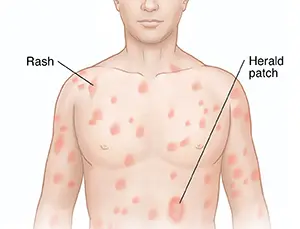
Pityriasis rosea is a common, temporary skin condition that causes a distinctive rash. It usually begins with a single large patch on the skin, often called a herald patch, followed by the appearance of smaller patches on the chest, back, abdomen, or limbs. The rash often forms a pattern on the back that resembles the shape of a Christmas tree.
This condition most commonly affects teenagers and young adults, although it can occur at any age. Pityriasis rosea is generally harmless and typically clears on its own within several weeks to a few months without leaving scars.
The exact cause of pityriasis rosea is not fully understood, but it is believed to be related to a viral infection. The condition is not usually considered highly contagious.
Symptoms
Symptoms of pityriasis rosea often develop gradually and may begin with a single patch before spreading to other areas of the body.
Common symptoms include:
-
A large, oval, pink or red patch on the skin known as a herald patch
-
Multiple smaller patches appearing days or weeks later
-
Rash commonly appearing on the chest, back, abdomen, or upper arms and thighs
-
Mild itching, which may worsen with heat or sweating
-
Slight scaling around the edges of the patches
-
Fatigue or mild flu-like symptoms before the rash appears in some cases
The rash may vary in color depending on skin tone and can last several weeks before fading.
Causes
The exact cause of pityriasis rosea is unknown, but researchers believe it may be associated with certain viral infections. Some evidence suggests a possible link with viruses that belong to the human herpesvirus family.
The condition is not related to the herpes virus that causes cold sores or sexually transmitted infections. In most cases, the rash develops without any clear trigger.
Although it may resemble certain fungal infections or allergic rashes, pityriasis rosea is a separate condition with a different cause.
Risk Factors
Certain factors may increase the likelihood of developing pityriasis rosea.
Risk factors include:
-
Age between 10 and 35 years
-
Seasonal changes, particularly during spring and fall
-
Recent viral illness
-
Weakened immune system
However, many people who develop the condition do not have any clear risk factors.
Complications
Pityriasis rosea usually resolves without serious complications, but some individuals may experience temporary issues.
Possible complications include:
-
Persistent itching that causes discomfort
-
Temporary skin discoloration after the rash fades, especially in people with darker skin tones
-
Rarely, severe itching or widespread rash
In most cases, the condition improves without long-term effects.
Prevention
Because the exact cause of pityriasis rosea is not clearly known, there is no specific way to prevent it.
General steps that may support skin health and reduce irritation include:
-
Maintaining good skin hygiene
-
Avoiding harsh soaps or skin products that may irritate the rash
-
Wearing loose, breathable clothing
-
Avoiding excessive heat and sweating that can worsen itching
-
Seeking medical advice if a rash spreads quickly or causes severe discomfort
Most cases of pityriasis rosea improve on their own, and medical treatment is usually aimed at relieving itching and skin irritation.
Advertisement
