
Overview
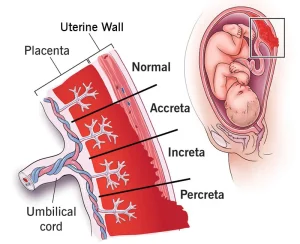
Placenta accreta is a serious pregnancy condition in which the placenta grows too deeply into the wall of the uterus. Normally, the placenta attaches to the uterine lining during pregnancy and detaches easily after childbirth. In placenta accreta, the placenta attaches more firmly and does not separate normally after delivery.
This condition is part of a group known as placenta accreta spectrum disorders. If the placenta grows deeper into the uterine wall, it may be referred to as placenta increta or placenta percreta, depending on how far the tissue extends.
Placenta accreta can lead to severe bleeding during or after childbirth and often requires careful medical management. Early diagnosis through prenatal imaging allows healthcare providers to plan delivery and reduce the risk of complications.
Symptoms
Placenta accreta often does not cause noticeable symptoms during pregnancy and is usually detected through routine prenatal ultrasound examinations.
However, some possible signs may include:
-
Vaginal bleeding during the third trimester
-
Abnormal findings on prenatal ultrasound
-
Placenta previa, where the placenta covers the cervix
-
Difficulty separating the placenta after childbirth
Because symptoms may be limited, regular prenatal care plays an important role in identifying the condition.
Causes
Placenta accreta occurs when the placenta attaches too deeply into the uterine wall due to abnormalities in the uterine lining. This may happen when the layer of tissue that normally separates the placenta from the uterine muscle is damaged or missing.
This abnormal attachment prevents the placenta from detaching normally after the baby is delivered.
Placenta accreta is more likely to occur when the placenta grows over areas of scar tissue in the uterus, which may alter normal implantation.
Risk Factors
Several factors may increase the risk of developing placenta accreta.
Risk factors include:
-
Previous cesarean delivery
-
Placenta previa during pregnancy
-
Previous uterine surgery
-
Multiple pregnancies
-
Maternal age over 35 years
-
Previous uterine procedures such as dilation and curettage
-
Scarring of the uterine lining
The risk increases when placenta previa occurs in women who have had prior cesarean sections.
Complications
Placenta accreta can cause serious complications, particularly during delivery.
Possible complications include:
-
Severe bleeding during or after childbirth
-
Need for blood transfusion
-
Premature delivery of the baby
-
Emergency surgery
-
Hysterectomy, which is the surgical removal of the uterus
-
Infection
Because of the risk of heavy bleeding, delivery is often carefully planned in a hospital setting with a specialized medical team.
Prevention
There is no guaranteed way to prevent placenta accreta, but certain measures may help reduce the risk.
Preventive approaches include:
-
Avoiding unnecessary cesarean deliveries when possible
-
Receiving regular prenatal care and monitoring during pregnancy
-
Early ultrasound screening in women with previous uterine surgery
-
Careful management of placenta previa and other pregnancy complications
Early detection and careful planning for delivery can help reduce risks and improve outcomes for both the mother and the baby.
Advertisement
