
Overview
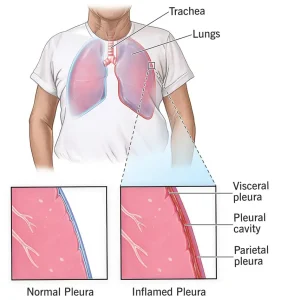
Pleurisy is a condition in which the pleura, the thin layers of tissue that line the lungs and the inside of the chest cavity, become inflamed. Normally, these layers slide smoothly against each other during breathing. When inflammation occurs, the layers rub together, causing sharp chest pain.
The pain associated with pleurisy often becomes worse during breathing, coughing, or sneezing. The condition is usually caused by infections or other underlying health problems affecting the lungs or chest.
Pleurisy itself is not a disease but a symptom of another condition. Identifying and treating the underlying cause is important to relieve symptoms and prevent complications.
Symptoms
The primary symptom of pleurisy is sharp chest pain that becomes worse when breathing.
Common symptoms include:
-
Sharp or stabbing chest pain
-
Pain that worsens during deep breathing, coughing, or sneezing
-
Shortness of breath due to pain while breathing
-
Dry cough
-
Fever and chills if an infection is present
-
Shoulder or back pain in some cases
The pain may improve when holding the breath or applying pressure to the chest.
Causes
Pleurisy occurs when the pleura become inflamed. This inflammation can be triggered by several conditions that affect the lungs or surrounding tissues.
Common causes include:
-
Viral infections
-
Bacterial infections such as pneumonia
-
Pulmonary embolism
-
Autoimmune diseases
-
Chest injuries
-
Lung cancer
-
Tuberculosis
In some cases, fluid may accumulate between the pleural layers, a condition known as pleural effusion.
Risk Factors
Certain factors may increase the risk of developing pleurisy.
Risk factors include:
-
Respiratory infections
-
Autoimmune diseases
-
Lung diseases
-
Recent chest injury or surgery
-
Blood clots in the lungs
-
Smoking
People with weakened immune systems may also be more susceptible to infections that lead to pleurisy.
Complications
If the underlying cause is not treated, pleurisy can lead to additional health problems.
Possible complications include:
-
Pleural effusion, where fluid builds up around the lungs
-
Difficulty breathing
-
Lung infections
-
Collapsed lung in severe cases
-
Persistent chest pain
These complications may require additional medical treatment.
Prevention
Preventing pleurisy mainly involves reducing the risk of infections and managing underlying health conditions.
Preventive measures include:
-
Getting prompt treatment for respiratory infections
-
Practicing good hygiene to reduce infection risk
-
Avoiding smoking
-
Managing chronic lung diseases properly
-
Seeking medical care for unexplained chest pain or breathing problems
Early diagnosis and treatment of the underlying cause can help prevent pleurisy and its complications.
Advertisement
