
Overview
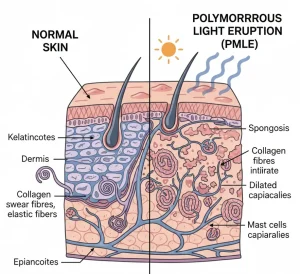
Polymorphous Light Eruption (PMLE) is a common skin condition triggered by exposure to sunlight, especially ultraviolet (UV) light. It is an immune-mediated reaction that causes an abnormal skin response to sunlight, resulting in rashes or lesions. PMLE usually appears in the spring or summer months when sun exposure increases and often affects areas of the skin that are covered or intermittently exposed.
Symptoms
The symptoms of PMLE can vary but commonly include:
-
Red, itchy bumps or papules
-
Small blisters in some cases
-
Patches or plaques that may be scaly
-
Rash appearing on sun-exposed areas such as arms, chest, and legs
-
Burning or tingling sensation before the rash develops
-
Symptoms typically appear within hours to days after sun exposure
Causes
PMLE occurs due to an abnormal immune response to sunlight, though the exact mechanism is not fully understood. Contributing factors include:
-
Exposure to ultraviolet A (UVA) or ultraviolet B (UVB) rays
-
Genetic predisposition, as it often runs in families
-
Certain medications or chemicals that make the skin more sensitive to sunlight
-
Hormonal changes or stress may trigger flare-ups in some individuals
Risk factors
Factors that increase the risk of developing PMLE include:
-
Fair or light skin that burns easily
-
Family history of PMLE or other photosensitivity disorders
-
Sudden increase in sun exposure after winter or prolonged indoor periods
-
Use of photosensitizing medications such as certain antibiotics or diuretics
-
Female gender, as PMLE is more common in women
Complications
PMLE is usually not life-threatening, but complications can occur if left unmanaged:
-
Persistent itching and discomfort affecting daily activities
-
Secondary skin infections due to scratching
-
Emotional distress or anxiety due to visible skin lesions
-
Rarely, PMLE may be confused with more serious photosensitive conditions
Prevention
Preventive measures can help reduce the frequency and severity of PMLE episodes:
-
Gradual sun exposure to build tolerance in spring and summer
-
Regular use of broad-spectrum sunscreen with high SPF
-
Wearing protective clothing, hats, and sunglasses
-
Avoiding peak sunlight hours, usually between 10 a.m. and 4 p.m.
-
Consulting a dermatologist for topical or oral treatments in severe cases
Early recognition and preventive strategies are key to managing Polymorphous Light Eruption and minimizing its impact on daily life.
Advertisement
