
Overview
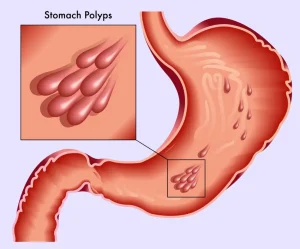
Stomach polyps are small growths that form on the inner lining of the stomach. Most polyps are benign (noncancerous), but some types can increase the risk of developing stomach cancer over time. They are often discovered incidentally during an endoscopy performed for other digestive issues. The size, number, and type of polyp determine whether treatment is necessary.
Symptoms
Many stomach polyps do not cause noticeable symptoms. When symptoms do occur, they may include:
-
Nausea or vomiting
-
Abdominal discomfort or pain
-
Bloating or feeling full quickly
-
Indigestion or heartburn
-
Rarely, bleeding that may appear as black or tarry stools
Small polyps often remain asymptomatic and are found only during routine examinations.
Causes
Stomach polyps develop when there is abnormal growth of cells in the stomach lining. Common causes include:
-
Chronic inflammation of the stomach lining, often due to Helicobacter pylori infection
-
Long-term use of proton pump inhibitors (PPIs) for acid reflux
-
Genetic conditions such as familial adenomatous polyposis
-
Aging, as polyps are more common in adults over 50
The exact cause varies depending on the type of polyp.
Risk Factors
Factors that may increase the likelihood of developing stomach polyps include:
-
Chronic gastritis or prolonged stomach inflammation
-
Helicobacter pylori infection
-
Long-term medication use for acid-related disorders
-
Family history of polyps or gastrointestinal cancers
-
Older age
Most polyps remain harmless, but certain types, such as adenomatous polyps, carry a higher risk of malignancy.
Complications
Although most stomach polyps are benign, potential complications include:
-
Bleeding or anemia if polyps ulcerate
-
Obstruction of the stomach or digestive tract in very large polyps
-
Increased risk of stomach cancer, particularly with adenomatous polyps
Regular monitoring helps prevent these complications.
Prevention
While not all stomach polyps can be prevented, some steps may reduce risk:
-
Treating Helicobacter pylori infections promptly
-
Limiting long-term use of medications that affect stomach lining without medical guidance
-
Eating a balanced diet rich in fruits and vegetables
-
Regular checkups and endoscopic evaluations if you have risk factors or a history of polyps
Early detection and monitoring are key to preventing potential complications and ensuring proper management.
Advertisement
