
Overview
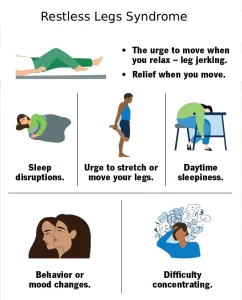
Restless legs syndrome (RLS) is a neurological disorder characterized by an uncontrollable urge to move the legs, usually accompanied by uncomfortable sensations such as tingling, crawling, or itching. Symptoms often worsen during periods of rest or inactivity, particularly in the evening or at night, and may interfere with sleep. RLS can affect people of all ages but is more common in adults over 40 and in women.
Restless Legs Syndrome Symptoms
Symptoms usually appear or worsen during rest and improve with movement.
-
Uncomfortable sensations in the legs (tingling, crawling, itching, or aching)
-
Strong urge to move the legs to relieve discomfort
-
Symptoms that worsen in the evening or at night
-
Difficulty falling asleep or staying asleep
-
Daytime fatigue and sleepiness
-
Periodic leg movements during sleep (PLMS)
-
Disrupted daily activities due to discomfort
Restless Legs Syndrome Causes
The exact cause of RLS is often unknown, but it may be linked to neurological and genetic factors.
-
Dysfunction of dopamine pathways in the brain
-
Iron deficiency or low ferritin levels
-
Chronic kidney disease or dialysis
-
Peripheral neuropathy
-
Pregnancy, particularly in the third trimester
-
Certain medications, such as antihistamines, antidepressants, or antipsychotics
-
Genetic predisposition in familial cases
Restless Legs Syndrome Risk Factors
Several factors increase the risk of developing RLS.
-
Female sex
-
Age over 40 years
-
Family history of RLS
-
Iron deficiency or anemia
-
Chronic medical conditions such as diabetes or kidney disease
-
Use of certain medications that affect dopamine or nerve function
-
Pregnancy, especially in women with low iron levels
Restless Legs Syndrome Complications
If untreated, RLS can lead to significant physical and emotional issues.
-
Chronic sleep deprivation and insomnia
-
Daytime fatigue and decreased concentration
-
Mood disturbances, including depression and anxiety
-
Reduced quality of life
-
Increased risk of cardiovascular issues due to sleep disruption
Restless Legs Syndrome Prevention
Prevention strategies focus on lifestyle management and addressing underlying conditions.
-
Maintaining regular sleep schedules
-
Engaging in moderate daily exercise
-
Avoiding caffeine, alcohol, and nicotine, especially in the evening
-
Managing underlying conditions such as iron deficiency or diabetes
-
Practicing leg-stretching and relaxation techniques before bedtime
-
Consulting a healthcare provider for persistent or severe symptoms
Early recognition and management of restless legs syndrome can improve sleep quality, reduce discomfort, and enhance overall well-being.
Advertisement
