
Overview
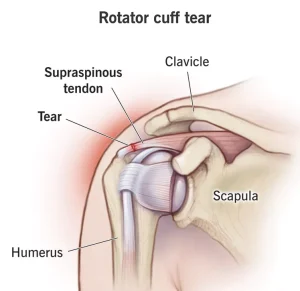
A rotator cuff injury involves damage to the group of muscles and tendons that stabilize the shoulder joint and allow smooth arm movement. These injuries can range from mild inflammation and strain to partial or complete tendon tears. Rotator cuff injuries are common in athletes, people with physically demanding jobs, and older adults due to wear and tear over time.
Symptoms of Rotator Cuff Injury
Symptoms may develop gradually or occur suddenly after an injury.
-
Dull or aching shoulder pain, often worsening at night
-
Pain when lifting or lowering the arm
-
Weakness in the shoulder
-
Limited range of motion
-
Clicking or popping sensation during shoulder movement
-
Difficulty performing overhead activities
Causes of Rotator Cuff Injury
Rotator cuff injuries can result from acute trauma or long-term degeneration.
Common causes include:
-
Repetitive overhead movements
-
Heavy lifting or sudden force to the shoulder
-
Age-related tendon degeneration
-
Poor posture affecting shoulder mechanics
-
Reduced blood supply to shoulder tendons with aging
Risk Factors for Rotator Cuff Injury
Certain factors increase the risk of developing a rotator cuff injury.
-
Advancing age
-
Repetitive shoulder use in sports or occupations
-
Poor shoulder strength or flexibility
-
Smoking
-
Family history of shoulder problems
Complications of Rotator Cuff Injury
Without proper treatment, rotator cuff injuries may lead to ongoing shoulder problems.
-
Chronic shoulder pain
-
Progressive tendon tears
-
Reduced shoulder function
-
Muscle weakness and stiffness
-
Difficulty performing daily activities
Early diagnosis and treatment help prevent long-term complications.
Prevention of Rotator Cuff Injury
Preventive strategies focus on maintaining shoulder strength and flexibility.
-
Regular shoulder and upper back strengthening exercises
-
Proper warm-up before physical activity
-
Avoiding repetitive strain and overuse
-
Maintaining good posture
-
Early treatment of shoulder pain to prevent worsening
Consistent care and preventive measures can reduce the risk of rotator cuff injury and support long-term shoulder health.
Request an appointment
Advertisement
