
Overview
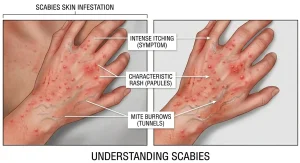
Scabies is a highly contagious skin condition caused by a microscopic mite called Sarcoptes scabiei. The mites burrow into the upper layer of the skin, where they live and lay eggs. This leads to intense itching and a characteristic skin rash. Scabies can affect people of all ages and backgrounds and spreads easily through close physical contact.
Although scabies is not usually a serious condition, it requires prompt treatment to prevent ongoing transmission and discomfort. Without proper treatment, the infestation can persist and spread to others.
Symptoms
Symptoms of scabies usually appear 2 to 6 weeks after initial exposure. In people who have had scabies before, symptoms may develop within a few days.
Common symptoms include:
-
Intense itching, especially at night
-
Thin, irregular burrow tracks on the skin
-
Small red bumps or blisters
-
Rash that may resemble pimples or eczema
Scabies commonly affects:
-
Between the fingers
-
Wrists and elbows
-
Armpits
-
Waistline
-
Genital area
-
Around the nipples
-
Buttocks
In infants and young children, the scalp, face, palms, and soles may also be involved.
Causes
Scabies is caused by infestation with the Sarcoptes scabiei mite. The condition spreads through prolonged skin-to-skin contact with an infected person. It can also spread through sharing clothing, bedding, or towels, although this is less common.
The mites burrow into the skin to lay eggs, triggering an allergic reaction that causes itching and rash. Crowded living conditions increase the risk of rapid spread.
Risk Factors
Certain factors increase the likelihood of developing scabies:
-
Close physical contact with an infected person
-
Living in crowded environments such as dormitories or care facilities
-
Sharing personal items like clothing or bedding
-
Weakened immune system
Outbreaks are more common in nursing homes, childcare centers, and prisons due to close contact among individuals.
Complications
If left untreated, scabies can lead to complications.
Possible complications include:
-
Secondary bacterial skin infections from excessive scratching
-
Impetigo
-
Cellulitis
-
Crusted scabies, a severe form seen in people with weakened immune systems
Crusted scabies is highly contagious and involves thick crusts of skin containing large numbers of mites.
Prevention
Scabies can be prevented by minimizing close contact with infected individuals and maintaining good hygiene practices.
Preventive measures include:
-
Avoid direct skin-to-skin contact with someone who has scabies
-
Wash clothing, bedding, and towels in hot water and dry on high heat
-
Seal non-washable items in a plastic bag for several days
-
Treat all close contacts at the same time to prevent reinfestation
Early diagnosis and proper treatment help stop the spread of scabies and reduce complications.
Advertisement
