
Overview
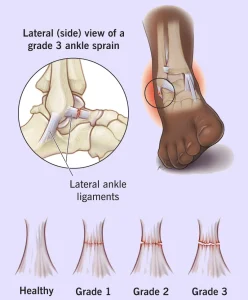
A sprained ankle is a common injury that occurs when the ligaments supporting the ankle are stretched or torn. Ligaments are strong bands of tissue that connect bones and help stabilize the joint. An ankle sprain often happens when the foot twists, rolls, or turns awkwardly, commonly during sports, walking on uneven surfaces, or accidental falls. The severity can range from mild ligament stretching to complete ligament tears.
Symptoms
Symptoms vary depending on the severity of the sprain. Common symptoms include:
-
Pain around the ankle, especially when bearing weight
-
Swelling and tenderness
-
Bruising or skin discoloration
-
Limited range of motion
-
Instability or a feeling that the ankle may give way
-
Warmth around the injured area
Symptoms may appear immediately or develop over several hours.
Causes
A sprained ankle usually results from sudden twisting or rolling of the foot beyond its normal range of motion. This movement overstretches the ankle ligaments, leading to microscopic tears or complete rupture. Activities involving jumping, running, sudden direction changes, or walking on uneven ground commonly contribute to this injury.
Risk Factors
Certain factors increase the risk of an ankle sprain:
-
Participation in sports that involve running, jumping, or quick turns
-
Walking or running on uneven or slippery surfaces
-
Wearing improper or unsupportive footwear
-
Previous ankle sprains, which can weaken ligament stability
-
Poor muscle strength or balance
These factors can make the ankle more vulnerable to injury.
Complications
If not managed properly, a sprained ankle may lead to complications such as:
-
Chronic ankle pain
-
Recurrent ankle sprains
-
Long-term joint instability
-
Reduced range of motion
-
Early development of ankle arthritis
Proper rehabilitation helps restore strength and prevent future injuries.
Prevention
Although not all ankle sprains can be prevented, several measures can reduce risk:
-
Wearing supportive footwear appropriate for the activity
-
Strengthening and balance exercises for the ankle and lower leg
-
Warming up before physical activity
-
Using ankle braces or taping for added support when needed
-
Avoiding uneven surfaces when possible
Consistent preventive care and proper recovery play an important role in maintaining ankle stability and function.
Advertisement
