
Overview
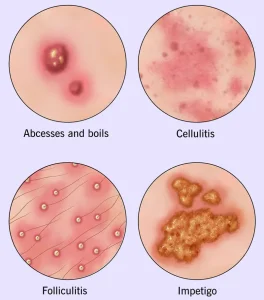
Staph infections are caused by Staphylococcus bacteria, commonly found on the skin or in the nose of healthy individuals. While these bacteria often cause no harm, they can lead to infection if they enter the body through a cut, wound, or medical device. Staph infections range from mild skin problems to serious, life-threatening conditions if the bacteria spread to deeper tissues or the bloodstream.
Symptoms
Symptoms vary depending on the type and severity of the infection. Common symptoms include:
-
Red, swollen, or painful skin lesions
-
Pus-filled boils or abscesses
-
Warmth around the affected area
-
Fever and chills in more severe infections
-
Fatigue or general discomfort
-
In serious cases, shortness of breath, chest pain, or confusion
Skin infections are the most common, but symptoms can become severe if internal organs are involved.
Causes
Staph infections occur when Staphylococcus bacteria enter the body and multiply. This often happens through broken skin, surgical wounds, insect bites, or the use of medical devices such as catheters. The bacteria can spread through direct skin-to-skin contact or by sharing personal items like towels or razors.
Risk Factors
Several factors increase the risk of developing a staph infection:
-
Cuts, scrapes, or open wounds
-
Close contact in crowded environments
-
Poor hygiene practices
-
Weakened immune system
-
Chronic health conditions such as diabetes
-
Recent surgery or hospitalization
-
Use of invasive medical devices
These factors make it easier for bacteria to enter the body or grow uncontrollably.
Complications
If not treated promptly, staph infections can lead to serious complications, including:
-
Spread of infection to the bloodstream
-
Infection of bones, joints, heart, or lungs
-
Sepsis
-
Tissue damage or necrosis
-
Recurring infections
Early medical care greatly reduces the risk of complications.
Prevention
While staph infections cannot always be prevented, certain steps can reduce the risk:
-
Washing hands regularly with soap and water
-
Keeping cuts and wounds clean and covered
-
Avoiding sharing personal items
-
Maintaining good personal hygiene
-
Following proper wound care and medical advice
-
Cleaning and disinfecting frequently touched surfaces
Consistent hygiene practices and early treatment are key to preventing the spread and severity of staph infections.
Advertisement
