
Overview
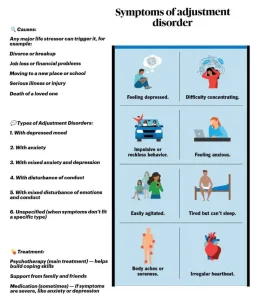
Diagnosis of Adjustment Disorder
A mental health professional typically diagnoses adjustment disorder through a detailed evaluation, including:
-
Talking about major life stressors and how they affect your daily life
-
Reviewing your medical, mental health, and social history
Guidelines for diagnosis include:
-
Symptoms appear within three months of a specific stressful event
-
Stress response is stronger than expected or significantly disrupts work, school, or relationships
-
Symptoms are not due to another mental health condition or part of normal grieving
Types of Adjustment Disorders
Adjustment disorders are categorized into six types:
-
With depressed mood: Feeling sad, tearful, hopeless, fatigued, and losing interest in activities
-
With anxiety: Nervousness, worry, difficulty concentrating, feeling overwhelmed; children may fear separation from loved ones
-
With mixed anxiety and depressed mood: Combination of depression and anxiety symptoms
-
With disturbed conduct: Behavioral issues such as fighting, reckless driving, skipping school, or property damage
-
With disturbed emotions and conduct: Mix of depression, anxiety, and behavioral problems
-
Unspecified: Symptoms don’t fit other types but may include physical issues, social difficulties, or work/school problems
Length of Symptoms
Adjustment disorders can be short-term or long-term:
-
Short term (acute): Symptoms last six months or less and usually improve after the stressful event passes
-
Long term (persistent/chronic): Symptoms last more than six months and continue to disrupt daily life
Treatment for Adjustment Disorder
Many people respond well to treatment, which may be brief or extended depending on symptom severity and ongoing stress. Common treatment approaches include talk therapy, medications, or a combination of both.
Talk Therapy
Talk therapy (psychotherapy) is the main treatment for adjustment disorders and can be provided individually, in groups, or with family. Therapy can help:
-
Provide emotional support
-
Restore your normal routine
-
Understand why the stressful event affected you
-
Learn stress management and coping skills
Medicines
Medications such as antidepressants or anti-anxiety drugs may be used alongside talk therapy to manage depression or anxiety symptoms.
Important:
-
Medicines are often needed only for a few months
-
Do not stop taking medicine without consulting your healthcare professional
-
Stopping suddenly can cause physical reactions and worsen symptoms
When to Seek Help
Seek professional help if you notice:
-
Difficulty coping with daily life after a stressful event
-
Symptoms of depression or anxiety that interfere with work, school, or relationships
-
Persistent emotional or behavioral changes lasting more than a few weeks
Advertisement
