
Overview
Diagnosis
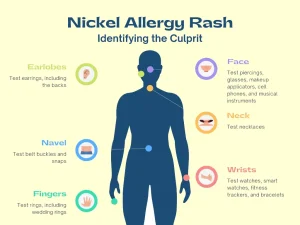
Nickel allergy is usually diagnosed based on a detailed medical history and a physical examination of the affected skin. A healthcare provider will ask about recent exposures to jewelry, metal accessories, clothing fasteners, or occupational contact with metals.
To confirm the diagnosis, a patch test is commonly performed. During this test, small amounts of nickel and other potential allergens are applied to patches placed on the skin, usually on the back. The patches remain in place for about 48 hours and are then checked for reactions over several days. A localized rash at the test site indicates a nickel allergy.
Other skin conditions such as eczema, fungal infections, or other contact allergies may be ruled out during the evaluation.
Treatment
There is no cure for nickel allergy, but treatment focuses on relieving symptoms and preventing future reactions. The most effective approach is strict avoidance of nickel-containing items.
Treatment options may include:
-
Topical corticosteroid creams to reduce inflammation and itching
-
Oral antihistamines to relieve itching and discomfort
-
Moisturizers to repair and protect the skin barrier
-
Antibiotics if a secondary skin infection develops
In severe or persistent cases, stronger prescription medications may be needed. Long-term management depends largely on identifying and avoiding sources of nickel exposure in daily life.
Preparing for Your Appointment
Preparing in advance can help make the medical visit more effective. Consider noting details about your symptoms and possible triggers.
Helpful steps include:
-
Listing when the rash started and how it has changed over time
-
Noting recent exposure to jewelry, watches, clothing fasteners, electronics, or workplace metals
-
Writing down any treatments already tried and their effects
-
Listing all medications and skincare products currently used
-
Preparing questions about testing, treatment options, and prevention strategies
Bringing photos of past flare-ups may also be useful if symptoms are not present during the appointment. Proper preparation helps ensure accurate diagnosis and effective management of nickel allergy.
Advertisement
