
Overview
Diagnosis
To diagnose Chagas disease, your healthcare professional will begin with a physical examination and a review of your symptoms and risk factors, such as travel history or exposure to the triatomine bug. If symptoms suggest Chagas disease, two or more blood tests are typically done to confirm the diagnosis.
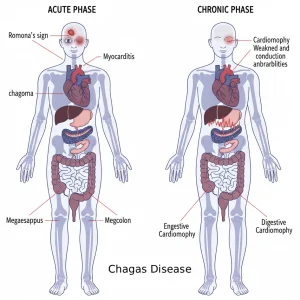
If you’re diagnosed with Chagas disease, additional tests may be recommended to determine if the infection has progressed to the chronic phase and caused complications affecting the heart or digestive system.
These tests may include:
-
Electrocardiogram (ECG or EKG): Records the heart’s electrical activity to detect irregular rhythms or damage.
-
Chest X-ray: Provides images of the heart and lungs to check for heart enlargement.
-
Echocardiogram: Uses sound waves to create images of the heart, helping detect changes in its structure or function.
-
Abdominal X-ray: Shows the stomach, intestines and colon to assess digestive issues.
-
Upper endoscopy: A thin, flexible tube with a light and camera is inserted through the throat to examine the esophagus and detect abnormalities.
More Information:
Electrocardiogram (ECG or EKG)
Upper endoscopy
X-ray
Treatment
Treatment for Chagas disease focuses on eliminating the parasite and managing symptoms.
-
Antiparasitic medicines: During the acute phase, medicines such as benznidazole and nifurtimox (Lampit) can kill the parasite. These treatments are most effective when started early. In the United States, these medicines are approved for use in children under 18 with chronic Chagas infection.
-
Chronic phase treatment: Once the disease becomes chronic, these medicines cannot cure the infection but may help slow its progression and reduce complications.
-
Heart-related complications: Treatment may involve medications, a pacemaker, or other cardiac devices to regulate heart rhythm. In severe cases, surgery or a heart transplant may be necessary.
-
Digestive complications: Management may include dietary changes, medications, and corticosteroids. In advanced cases, surgery might be required to relieve severe digestive issues.
Request an appointment
Advertisement
