
Overview
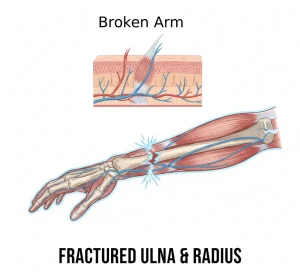
Diagnosis of a Broken Arm
Your doctor will examine your arm for tenderness, swelling, deformity, or an open wound. After discussing your symptoms and the cause of the injury, your doctor may order:
-
X-rays: To determine the location and extent of the break.
-
MRI or CT scan: Occasionally used for more detailed images.
Types of Arm Fractures
-
Open (compound) fracture: Bone pierces the skin; requires immediate treatment to prevent infection.
-
Closed fracture: Skin remains intact.
-
Displaced fracture: Bone fragments are misaligned; may require surgery.
-
Comminuted fracture: Bone is broken into multiple pieces, often needing surgery.
-
Greenstick fracture: Bone cracks but doesn’t break completely; common in children.
-
Buckle (torus) fracture: One side of the bone compresses and bends; also common in children.
Setting the Bone
-
Reduction: Displaced fractures may need the bones realigned.
-
You may receive a muscle relaxant, sedative, or general anesthesia depending on pain and swelling.
Immobilization
-
Splint, sling, brace, or cast is used to restrict movement for healing.
-
Cast application usually occurs 5–7 days after injury when swelling decreases.
-
Follow-up X-rays may be needed to ensure bones remain aligned.
Medications
-
Over-the-counter pain relievers for mild pain.
-
Prescription narcotics for severe pain.
-
NSAIDs can reduce pain but may affect bone healing if used long term.
-
Antibiotics are given for open fractures to prevent infection.
Therapy
-
Begin motion exercises early to reduce stiffness in the arm, hand, and shoulder.
-
After cast or sling removal, your doctor may recommend physical therapy to restore strength, flexibility, and range of motion.
Surgery
-
Required for unstable or severely displaced fractures.
-
Surgery may be delayed until swelling decreases.
-
Fixation devices (wires, plates, nails, screws) hold bones in place.
-
Complications are rare but can include infection or non-healing of the bone.
Advertisement
