
Overview
Diagnosis
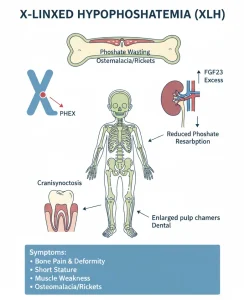
Diagnosis of X-Linked Hypophosphatemia involves clinical evaluation, blood tests, and genetic analysis. Symptoms such as bowed legs, short stature, and bone pain in childhood often prompt testing. Blood tests typically show low phosphate levels with normal calcium and low levels of active vitamin D. Urine tests reveal excess phosphate loss. Genetic testing confirms mutations in the PHEX gene, which is responsible for phosphate regulation. X-rays may also show characteristic bone deformities consistent with rickets or osteomalacia.
Treatment
Treatment focuses on correcting phosphate deficiency and managing bone deformities. Standard therapy includes oral phosphate supplements and active vitamin D analogs such as calcitriol or alfacalcidol. Newer treatments like burosumab, a monoclonal antibody that targets FGF23, can help regulate phosphate metabolism more effectively. Supportive measures such as physiotherapy and orthopedic care may be required for bone deformities. Regular monitoring of growth, kidney function, and mineral balance is important to prevent complications.
Advertisement
