
Overview
Diagnosis
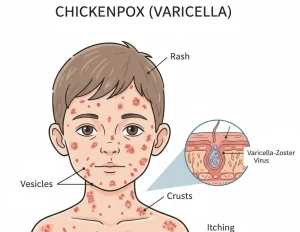
Most often, health care providers diagnose chickenpox based on the rash.
Chickenpox can also be confirmed with laboratory tests, including blood tests or a tissue study of samples from affected skin.
Treatment
In otherwise healthy children, chickenpox often doesn’t require medical treatment. Some children may take an antihistamine to reduce itching, but the illness usually needs to run its course.
If you’re at high risk of complications
For people at higher risk of complications, health care providers may prescribe medicines to shorten the illness and lower the risk of serious issues.
If you or your child is at high risk, your provider may suggest antiviral medicine such as acyclovir (Zovirax, Sitavig). These medicines work best when taken within 24 hours of the rash appearing.
Other antiviral drugs such as valacyclovir (Valtrex) and famciclovir may also help reduce the severity of the illness, but they are not suitable for everyone. In some cases, your provider may recommend the chickenpox vaccine after exposure to the virus to help prevent or lessen the infection.
Treating complications
If complications occur, your health care provider will decide the best treatment approach.
Common examples include:
-
Antibiotics for infected skin or pneumonia
-
Antiviral medicine for brain swelling (encephalitis)
-
Hospital treatment if symptoms become severe
Lifestyle and home remedies
To help relieve the symptoms of mild chickenpox:
-
Avoid scratching to prevent scarring and infection. Trim fingernails or use gloves at night for children.
-
Take cool baths with baking soda, aluminum acetate, or colloidal oatmeal to ease itching.
-
Apply calamine lotion on itchy spots.
-
Follow a soft, bland diet if sores are in the mouth.
-
Use acetaminophen (Tylenol) for mild fever — avoid aspirin, which can cause Reye’s syndrome.
-
Ask your provider before using antihistamines or ibuprofen, as they may not be suitable for everyone.
Preparing for your appointment
Before visiting your provider, prepare by noting:
-
Any symptoms and when they began
-
Possible recent exposure to someone with chickenpox
-
Any current medicines or health issues
-
Questions you want to ask your provider
Common questions to ask
-
What is the most likely cause of these symptoms?
-
What treatment do you recommend?
-
How long will recovery take?
-
Are there home remedies that can help relieve symptoms?
-
How contagious am I or my child, and for how long?
-
How can we prevent spreading chickenpox to others?
What to expect from your doctor
Your provider may ask:
-
When symptoms started and how they’ve progressed
-
Whether there’s been recent exposure to someone with chickenpox
-
If you or your child received the chickenpox vaccine
-
What medicines or supplements are being taken
-
Whether you or your child are pregnant, breastfeeding, or in school or child care
What you can do in the meantime
Rest as much as possible and avoid touching the rash.
Because chickenpox is highly contagious until all blisters have crusted, consider staying home and wearing a mask in public if necessary.
Advertisement
