
Overview
Diagnosis
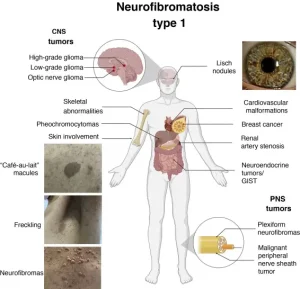
Diagnosis of neurofibromatosis type 1 (NF1) begins with a review of personal and family medical history and a physical exam.
-
Skin exam: Your child’s skin is checked for cafe au lait spots, which can indicate NF1.
-
Eye exam: An eye exam may reveal Lisch nodules, cataracts, or vision loss.
-
Imaging tests: X-rays, CT scans, or MRIs can identify bone changes, tumors in the brain or spinal cord, and very small tumors. MRI may be used to detect optic gliomas.
-
Genetic tests: Genetic testing can support the diagnosis and can be done prenatally. Genetic counseling may be recommended.
A diagnosis of NF1 typically requires at least two symptoms of the condition. Children with only one symptom and no family history are usually monitored for additional symptoms. NF1 is often diagnosed by age 4.
Treatment
There is no cure for NF1, but symptoms can be managed. Early care by a specialist improves outcomes.
-
Monitoring: Yearly checkups are recommended to:
-
Examine the skin for new neurofibromas or changes in existing ones
-
Monitor blood pressure
-
Track growth and development, including height, weight, and head circumference
-
Observe for signs of early puberty
-
Detect skeletal changes
-
Assess learning and school progress
-
Conduct a complete eye exam
-
-
Medicine: Selumetinib (Koselugo) is approved for children with plexiform neurofibromas to shrink tumor size. Clinical trials of similar drugs are ongoing for children and adults.
-
Surgery and other procedures: Surgery may be needed to remove tumors that are compressing tissue or damaging organs.
-
Cancer treatment: NF1-related cancers are treated with standard therapies, including surgery, chemotherapy, and radiation therapy. Early diagnosis and treatment are critical for better outcomes.
-
Potential future treatments: Gene therapies are being investigated, including strategies to replace the NF1 gene and restore neurofibromin function.
Advertisement
