
Overview
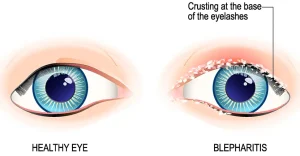
Diagnosis of Blepharitis
Diagnosing blepharitis usually involves a careful examination of your eyelids and eyes.
-
Examining Your Eyes:
-
Your healthcare professional may use a magnifying instrument to inspect your eyelids and eyes closely.
-
-
Laboratory Tests:
-
In some cases, a swab is taken from the eyelid oil or crust for bacterial testing.
-
Eyelashes may be examined under a microscope to detect excess eyelash mites.
-
-
Response to Treatments:
-
Improvement with standard treatments generally confirms the diagnosis.
-
If symptoms persist, especially in one eye, additional tests may check for eyelid skin cancer or immune-system disorders. Signs may include eyelash loss or scarring on the conjunctiva (the eye’s surface).
-
Treatment of Blepharitis
Blepharitis often requires a combination of self-care and prescription treatments.
-
Self-Care Measures:
-
Regularly wash your eyelids and use warm compresses.
-
Daily eyelid cleaning can help manage chronic symptoms.
-
-
Prescription Medicines:
-
Antibiotics: Eye drops, creams, ointments, or oral antibiotics may relieve bacterial-related symptoms.
-
Anti-Inflammatory Medicines: Steroid eye drops or ointments are used when other treatments are ineffective.
-
Immune-Modulating Medicines: Cyclosporine eye drops (Restasis, Cequa, others) can reduce some signs and symptoms.
-
-
Treating Underlying Conditions:
-
Conditions like dandruff or rosacea may need to be managed to improve blepharitis symptoms.
-
-
Chronic Management:
-
Blepharitis is rarely fully cured. Even with successful treatment, ongoing eyelid care is often necessary.
-
Advertisement
