
Overview
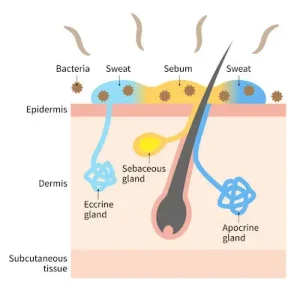
Diagnosis
Your healthcare professional will likely ask about your medical history and perform a physical exam. Blood or urine tests may be done to determine if your symptoms are caused by a medical condition, such as an infection. Other possible causes include diabetes or an overactive thyroid, also called hyperthyroidism.
Treatment
Sweating and body odor of the underarms can often be managed with over-the-counter antiperspirants or deodorants:
-
Antiperspirants contain metal salts, such as aluminum, that block sweat pores and reduce the amount of sweat that reaches the skin. They work best when applied to dry skin daily. Many antiperspirants also function as deodorants.
-
Deodorants help eliminate odor but do not reduce sweat. They are usually alcohol-based and make the skin acidic, which limits odor-causing bacteria. Deodorants often include fragrances to mask odor.
If over-the-counter products are not effective, your healthcare professional may prescribe a stronger antiperspirant. These can sometimes cause a rash, swelling, or itching, so it is important to follow the product instructions carefully.
For severe sweating or persistent body odor, additional treatments may be considered, including laser hair removal or botulinum toxin A injections. Consult your healthcare professional to discuss these options.
Advertisement
