
Overview
Diagnosis
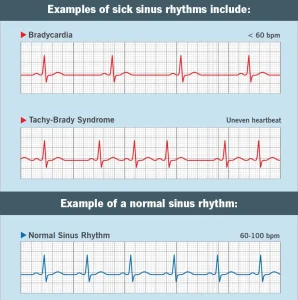
To diagnose sick sinus syndrome, a healthcare provider performs a physical exam and reviews your symptoms and medical history. Symptoms such as dizziness, shortness of breath, or fainting may only appear when the heart is beating irregularly.
Tests that help confirm the diagnosis include:
-
Electrocardiogram (ECG or EKG): Measures the electrical activity of the heart using electrodes on the chest and legs. Patterns in the heart’s signals can indicate sick sinus syndrome.
-
Holter monitor: A portable ECG device worn for 24 to 72 hours to record heart activity during daily routines. A symptom diary may be kept alongside.
-
Event recorder: Worn for up to 30 days, this device records heart activity when a button is pressed during symptoms.
-
Other monitors: Some smart watches and wearable devices can track heart rhythm. Discuss with your provider if these are suitable.
-
Implantable loop recorder: Implanted under the skin for long-term monitoring of infrequent symptoms.
-
Electrophysiologic (EP) testing: In rare cases, thin wires with electrodes are threaded through blood vessels to map the heart’s electrical signals.
Treatment
The goals of treatment for sick sinus syndrome are to reduce or eliminate symptoms and manage contributing health conditions. Treatment options may include:
-
Regular checkups: For those without symptoms, monitoring may be all that is needed.
-
Medications: Adjusting medications that affect the sinus node, slowing fast heartbeats, or using blood-thinners if atrial fibrillation is present.
-
Pacemaker implantation: Most people with symptoms require a pacemaker, a small device placed under the skin near the collarbone to regulate heart rhythm. Types include:
-
Single chamber pacemaker
-
Dual chamber pacemaker
-
Biventricular pacemaker for heart failure
-
-
Cardiac ablation: Heat or cold energy is used to create small scars in the heart to block faulty electrical signals. This may include:
-
Pulmonary vein isolation to correct irregular rhythms
-
Atrioventricular (AV) node ablation combined with pacemaker implantation to control fast heart rates
-
Treatment plans are individualized based on symptom severity, heart rhythm patterns, and overall health.
Request an appointment
Advertisement
