
Overview
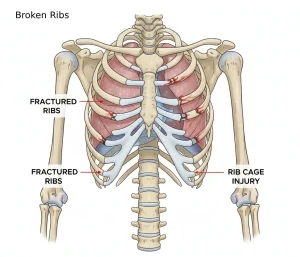
Diagnosis of Broken Ribs
-
During the physical exam, your healthcare provider may:
-
Press gently on the ribs to check for tenderness.
-
Listen to your lungs and watch how your rib cage moves when you breathe.
-
-
Imaging tests that may help diagnose broken ribs include:
-
X-ray: Shows bones using low levels of radiation. Fresh breaks or cracks may not always appear. Can also detect collapsed lungs.
-
CT scan: Detects breaks missed by X-rays and provides detail on soft tissue and blood vessel injuries.
-
MRI: Assesses soft tissues and organs around the ribs and can detect smaller breaks.
-
Bone scan: Useful for detecting stress fractures caused by repetitive trauma. Involves injecting a small amount of radioactive material that collects in healing bones.
-
Treatment
Healing
-
Most broken ribs heal on their own within six weeks.
-
Rest and reduced activity help with recovery.
-
Ice can help relieve pain and swelling.
Medicines
-
Pain relief is important, as shallow breathing from pain can lead to pneumonia.
-
If oral medications aren’t enough, nerve blocks (injections) can numb the nerves leading to the ribs.
Therapy
-
Once pain is manageable, breathing exercises help restore full lung capacity.
-
Deep breathing is important to prevent pneumonia and maintain lung function.
Advertisement
