
Overview
Diagnosis
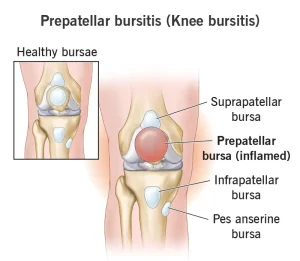
Diagnosis of knee bursitis begins with a review of your medical history followed by a physical exam. Your healthcare professional may compare both knees, especially if pain is present on only one side. The affected area is examined for warmth, swelling, tenderness, and changes in skin color that could suggest infection. Your provider also gently moves your knee and leg to check the range of motion and identify movements that cause pain.
Imaging tests may be recommended to rule out other possible causes of knee pain. These can include:
-
X-ray to look for bone problems or arthritis
-
MRI to create detailed images of soft tissues, including bursae
-
Ultrasound to detect swelling or fluid in the affected bursa
In some cases, aspiration is performed. A needle is used to remove fluid from the bursa to test for infection or gout. This procedure may also help relieve symptoms by reducing pressure in the area.
Treatment
Treatment for knee bursitis focuses on easing symptoms and supporting recovery. The approach depends on the type of bursitis and whether infection is present.
Medications may be prescribed if bacteria are causing the inflammation. Antibiotics are used for infections, while surgery to remove the bursa is considered only if medicine does not resolve the problem.
Physical therapy may be recommended to strengthen and stretch the muscles around the knee. This can help reduce pain and prevent future flare-ups. Therapists may also suggest protective knee braces for activities that require kneeling or compression sleeves to help with swelling.
Procedures and surgical options include:
-
Corticosteroid injections to reduce inflammation and provide pain relief when basic treatments are not enough
-
Aspiration to remove excess fluid from the bursa and reduce swelling, followed by temporary bracing to support healing
-
Surgery to remove the affected bursa, which is rarely needed but may be considered if symptoms persist or infection does not improve
Advertisement
