
Overview
Diagnosis
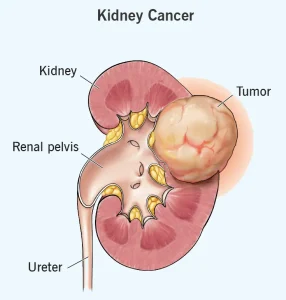
Kidney cancer diagnosis often begins with a physical exam and a review of your medical history. Blood and urine tests may provide clues about what is causing symptoms, and imaging tests can detect the presence, size and location of a kidney tumor. In some cases, a biopsy may be used to confirm the diagnosis.
Tests used to diagnose kidney cancer include:
-
Blood and urine tests to check for abnormalities such as low red blood cell levels, blood in the urine, bacteria or cancer cells.
-
Imaging tests such as ultrasound, CT or MRI to create detailed pictures of the kidneys and surrounding structures.
-
Biopsy, in which a thin needle is used to collect a tissue sample from the kidney or nearby lymph nodes. A biopsy may not be necessary if imaging results clearly indicate kidney cancer.
Kidney cancer staging
Once kidney cancer is diagnosed, the next step is staging. Staging determines how far the cancer has spread. Additional CT or MRI scans are often used. Kidney cancer stages range from 1 to 4. Stage 1 tumors are small and limited to the kidney, while stage 4 cancers have spread beyond the kidney to other parts of the body.
Treatment
Kidney cancer treatment depends on factors such as overall health, cancer type, cancer stage and personal preferences. For cancers limited to the kidney, surgery may be the only treatment. If the cancer has spread, other therapies may be used alone or in combination.
Surgery
Surgery is often the first treatment for kidney cancers confined to the kidney. The goal is to remove the cancer while preserving as much kidney function as possible.
Options include:
-
Removing the affected kidney through a complete nephrectomy. This procedure removes the entire kidney and a margin of nearby healthy tissue. It may be done through one incision or with laparoscopic or robotic techniques.
-
Removing the cancerous part of the kidney through a partial nephrectomy. This approach removes only the tumor and a small margin of healthy tissue. It is often recommended for small tumors or when someone has only one kidney. It may reduce the risk of long-term kidney disease.
Cryoablation
Cryoablation is a treatment that freezes cancer cells. A hollow needle is inserted into the kidney tumor using imaging guidance, and cold gas is used to destroy the cancer. This method may be used for small kidney cancers, particularly in people unable to undergo surgery.
Radiofrequency ablation
Radiofrequency ablation uses heat to destroy cancer cells. A probe is inserted into the tumor, and an electrical current heats the tissue. This treatment may be used for small tumors in people who cannot have surgery.
Radiation therapy
Radiation therapy uses powerful energy beams to kill cancer cells. It is generally not the main treatment for kidney cancer but may be used to control symptoms or treat cancer that has spread to organs such as the bones or brain.
Targeted therapy
Targeted therapy uses medicines to attack specific abnormalities in cancer cells. By blocking these targets, the treatment can slow or stop cancer growth.
Immunotherapy
Immunotherapy helps the immune system find and destroy cancer cells. It may be used after surgery to reduce the risk of recurrence or for advanced kidney cancer that has spread beyond the kidney.
Chemotherapy
Chemotherapy uses strong medicines to kill cancer cells. Most kidney cancers do not respond well to chemotherapy, but it may be used for rare types of kidney cancer.
Palliative care
Palliative care focuses on improving comfort and quality of life for people with serious illnesses such as cancer. It helps relieve symptoms, manage stress and support patients and their families. Palliative care can be provided alongside treatments such as surgery, targeted therapy, radiation therapy and immunotherapy. Using palliative care along with standard treatments may help people live better and longer.
Advertisement
