
Overview
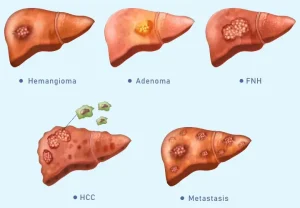
Diagnosis of Liver Cancer
Tests and procedures used to diagnose liver cancer include:
Blood tests
Blood tests may reveal abnormalities in liver function.
Imaging tests
Your doctor may recommend imaging tests such as ultrasound, CT, and MRI to visualize the liver and detect tumors.
Liver biopsy
Sometimes it is necessary to remove a small piece of liver tissue for laboratory testing to confirm the diagnosis.
- During a liver biopsy, a thin needle is inserted through the skin into the liver to obtain a tissue sample.
- The tissue is examined under a microscope for cancer cells.
- Risks include bleeding, bruising, and infection.
Determining the extent of the cancer (staging)
Once diagnosed, additional imaging tests such as CT, MRI, and bone scans help determine the size, location, and spread of the cancer.
- Staging uses systems with Roman numerals I–IV or letters A–D.
- The stage guides treatment options and prognosis.
Treatment Options for Liver Cancer
Treatments depend on the stage of the disease, liver function, age, overall health, and personal preferences.
Surgery
Surgery to remove the tumor
In suitable cases with small tumors and good liver function, the cancer and a margin of healthy tissue are removed.
Liver transplant surgery
The diseased liver is replaced with a healthy donor liver. This option is available only for a small percentage of people with early-stage liver cancer.
Localized treatments
Radiofrequency ablation
Electric current heats and destroys cancer cells using needles guided by imaging.
Cryoablation
Extreme cold (liquid nitrogen) is applied directly to tumors to freeze and destroy cancer cells.
Alcohol injection
Pure alcohol is injected into the tumor to cause cell death.
Chemoembolization
Strong chemotherapy drugs are delivered directly into the liver.
Radiation beads
Tiny spheres containing radiation are placed in the liver to target the tumor.
Radiation therapy
High-powered energy beams (X-rays or protons) destroy cancer cells while sparing healthy tissue.
- Used when surgery is not possible or to control symptoms in advanced cases.
- Includes external beam radiation and stereotactic body radiotherapy.
Targeted drug therapy
Drugs block specific abnormalities in cancer cells, causing them to die. Many options exist for advanced liver cancer; testing may identify if certain genetic changes make them effective.
Immunotherapy
Helps the immune system recognize and attack cancer cells. Generally used for advanced liver cancer.
Chemotherapy
Drugs kill rapidly growing cells and may be used for advanced liver cancer.
Supportive (palliative) care
Specialized care relieves pain and symptoms, provided alongside other treatments to improve quality of life.
Advertisement
