
Overview
Diagnosis
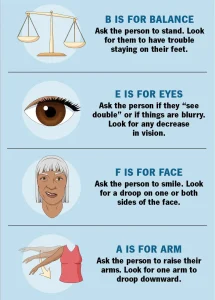
When someone arrives at the hospital with stroke symptoms, the medical team works quickly to find out what type of stroke is occurring. Imaging tests are usually done soon after arrival to check for bleeding, blocked blood vessels or other conditions that could cause similar symptoms. A physical exam includes checking the heart, blood pressure and performing a neurological assessment to understand how the stroke is affecting the nervous system.
Blood tests help show how quickly the blood clots, whether blood sugar levels are abnormal and if there are signs of infection. A CT scan creates detailed images of the brain to show bleeding, ischemic stroke or other issues. Sometimes a dye is used to view blood vessels more clearly in a CT angiography. An MRI gives detailed images of brain tissue and can detect damaged areas from stroke or bleeding. Dyes may be used during the test to look at blood flow in arteries and veins.
Other tests may include a carotid ultrasound to check for plaque buildup in the neck arteries, a cerebral angiogram to see detailed views of the brain’s blood vessels and an echocardiogram to look for clots in the heart that might have traveled to the brain.
Treatment
Treatment depends on whether the stroke is ischemic or hemorrhagic. An ischemic stroke happens when blood vessels in the brain are blocked or narrowed. A hemorrhagic stroke happens when there is bleeding in the brain.
For an ischemic stroke, restoring blood flow quickly is essential. Emergency IV medicine can dissolve the clot causing the stroke. This medicine, called recombinant tissue plasminogen activator, must be given within a limited time window, and earlier treatment leads to better outcomes. Some people benefit from endovascular procedures, where healthcare professionals treat the stroke directly inside the blood vessel. This may include delivering medicine through a catheter placed into a brain artery or removing a clot with a stent retriever. Newer imaging tests help determine who may benefit from these procedures.
Additional procedures may be recommended to reduce the risk of another stroke. These options include carotid endarterectomy to remove plaque from a neck artery or angioplasty and stenting to widen a narrowed artery and support it with a stent.
For a hemorrhagic stroke, treatment focuses on controlling bleeding and lowering pressure in the brain. If someone is taking blood thinners, medicines or blood products may be given to reverse their effects. Other medicines may be used to lower brain pressure, manage blood pressure, prevent vessel spasms or prevent seizures.
Some people may need surgery if there is significant bleeding or blood vessel damage. Surgical options include clipping an aneurysm, placing coils to block blood flow into an aneurysm or removing an arteriovenous malformation. Stereotactic radiosurgery may also be used to repair blood vessel issues with focused radiation.
Recovery begins after emergency treatment. The goal is to help the person regain as much function as possible and return to independent living. The effects of a stroke depend on which part of the brain was involved and how much damage occurred. Rehabilitation often begins in the hospital and continues in a rehab unit, skilled nursing facility, outpatient clinic or at home.
A rehabilitation team may include neurologists, rehabilitation doctors, nurses, dietitians, therapists, social workers and mental health professionals. Therapy may focus on improving movement, speech, daily activities and emotional well-being. Each person’s recovery timeline and progress are unique, and the treatment plan is tailored to individual needs and goals.
Advertisement
