
Overview
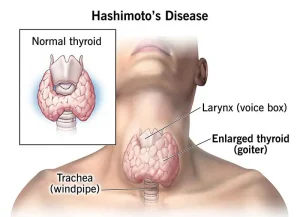
Diagnosis of Hashimoto’s Disease
Hashimoto’s disease can cause hypothyroidism, but other conditions may produce similar symptoms. Diagnosis involves a thorough physical exam, review of medical history, and assessment of symptoms.
Testing Thyroid Function
To determine if hypothyroidism is the cause, your healthcare provider may order blood tests:
-
TSH test: Measures thyroid-stimulating hormone. High levels indicate the thyroid is underactive.
-
T-4 test: Measures thyroxine levels. Low T-4 confirms hypothyroidism and identifies the thyroid as the source of the problem.
Antibody Tests
Hashimoto’s disease is an autoimmune disorder in which the immune system produces antibodies that attack the thyroid.
-
TPO antibodies: Most people with Hashimoto’s disease have antibodies to thyroid peroxidase, a key protein in thyroid hormone production.
-
Additional antibody tests may be ordered to confirm the diagnosis and guide treatment.
Treatment of Hashimoto’s Disease
Most people with Hashimoto’s disease take medication to manage hypothyroidism. If the condition is mild, regular monitoring of TSH levels may be sufficient.
T-4 Hormone Replacement Therapy
-
Levothyroxine: A synthetic form of T-4 used to restore normal hormone levels and alleviate hypothyroid symptoms.
-
The goal is to maintain adequate T-4 levels for normal body function.
-
Treatment is typically lifelong.
Monitoring Dosage
-
Dosage is tailored to age, weight, thyroid production, medical conditions, and other factors.
-
TSH levels are retested 6 to 10 weeks after starting or adjusting therapy.
-
Once stabilized, medication is taken once daily, usually in the morning before eating.
-
Regular follow-up tests are recommended at least annually or after dosage changes.
Precautions
-
Proper dosing generally has no side effects.
-
Excess thyroid hormone can increase the risk of osteoporosis or irregular heartbeats.
-
Certain foods, supplements, and medications may interfere with absorption. These include:
-
Soy products
-
High-fiber foods
-
Iron supplements
-
Cholestyramine
-
Aluminum hydroxide
-
Sucralfate
-
Calcium supplements
-
T-3 Hormone Replacement Therapy
-
T-4 is naturally converted to T-3 in the body. Most people achieve adequate T-3 levels with T-4 therapy alone.
-
For additional symptom control, synthetic T-3 (Cytomel) or a T-4/T-3 combination may be prescribed.
-
Potential side effects include rapid heartbeat, insomnia, and anxiety. Treatment may be trialed for 3 to 6 months to assess effectiveness.
Advertisement
