
Overview
Diagnosis
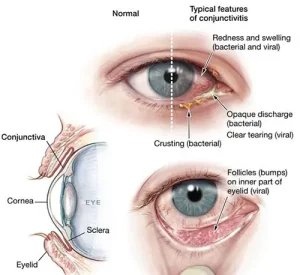
In most cases, pink eye can be diagnosed by your healthcare professional through a discussion of your recent health history, symptoms, and a physical examination of your eyes.
In rare situations, your healthcare professional may take a sample of the fluid that drains from your eye for laboratory testing, called a culture. This may be needed if symptoms are severe or if a high-risk cause is suspected, such as:
• A foreign body in the eye
• A serious bacterial infection
• A sexually transmitted infection
Treatment
Treatment for pink eye primarily focuses on relieving symptoms. Your healthcare professional may recommend:
• Using artificial tears
• Cleaning your eyelids with a wet cloth
• Applying cold or warm compresses several times a day
If you wear contact lenses, stop using them until treatment is complete. Discard soft contacts that were worn before or during the illness. Hard lenses should be disinfected overnight before reuse. Replace any contact lens accessories, such as cases, and any eye makeup used prior to the infection.
Most cases of pink eye are viral and do not require antibiotic eye drops, as these will not help and may cause harm. Symptoms usually resolve on their own within 2 to 3 weeks. Viral conjunctivitis often starts in one eye and spreads to the other within a few days.
Antiviral medications may be considered if the infection is caused by the herpes simplex virus.
Treatment for allergic conjunctivitis
If your pink eye is caused by allergies, your healthcare professional may prescribe eye drops to control allergic reactions or inflammation. These may include:
• Antihistamines and mast cell stabilizers
• Decongestants, steroids, or anti-inflammatory drops
Nonprescription options may also be effective. Avoiding the allergens that trigger your symptoms can help reduce the severity of allergic conjunctivitis.
Advertisement
