
Overview
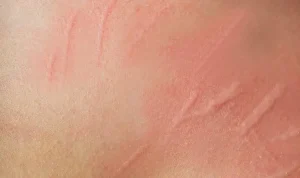
Diagnosis
To diagnose dermatographia, a simple physical test is often performed by a healthcare provider. The provider may gently draw a tongue depressor or another smooth object across the skin of your arm or back. If a raised red line or welt appears within a few minutes, it confirms the presence of dermatographia. This test helps identify the skin’s overreactive response without the need for lab tests or imaging.
Treatment
In many cases, dermatographia doesn’t require medical treatment because symptoms often clear up on their own. However, when symptoms are severe or cause discomfort, treatment can help reduce itching and swelling.
Common treatment approaches include:
-
Taking mild antihistamine medicines that are available over the counter, such as fexofenadine (Allegra), loratadine (Alavert, Claritin), or cetirizine. These options help control allergic responses without causing drowsiness.
-
If symptoms persist, your healthcare provider may prescribe a stronger antihistamine for nighttime use, such as doxepin.
Preparing for your appointment
You may begin by visiting your primary care provider, who may refer you to a dermatologist or an allergist for specialized evaluation. To get the most from your appointment, it helps to prepare in advance.
Things you can do before your visit include:
-
Ask if you need to stop taking antihistamines before the appointment.
-
Write down all your symptoms, even those that seem unrelated to your skin condition.
-
Note any major life changes or stressful events.
-
Make a list of all medicines, vitamins, and supplements you are currently taking.
What to expect from your doctor
During the visit, your healthcare provider may ask questions such as:
-
When did your symptoms start?
-
Were you ill or taking new medication when symptoms began?
-
Are your symptoms constant or do they come and go?
-
Do your symptoms interfere with your daily activities?
-
Do you have allergies or other skin conditions?
-
What seems to make your symptoms better or worse?
Preparing for these questions can help your doctor make an accurate diagnosis and create an effective treatment plan to manage dermatographia.
Request an appointment
Advertisement
