
Overview
Diagnosis
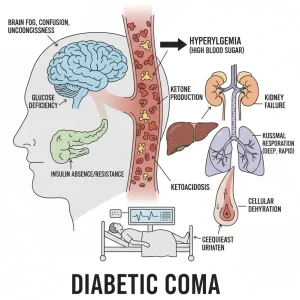
If a person experiences a diabetic coma, it is crucial that diagnosis happens immediately. The emergency medical team will perform a physical examination and may ask bystanders about the patient’s medical history. Wearing a medical identification bracelet or necklace can help identify diabetes quickly.
At the hospital, several lab tests are usually performed to confirm the diagnosis and identify the cause of the coma.
Lab tests may include:
-
Blood sugar level measurement
-
Ketone level testing
-
Blood tests to check nitrogen, creatinine, potassium, and sodium levels
These results help determine whether the coma is caused by high or low blood sugar levels and guide appropriate treatment.
Treatment
A diabetic coma is a medical emergency that requires immediate hospital care. The treatment depends on whether blood sugar levels are too high (hyperglycemia) or too low (hypoglycemia).
For high blood sugar (hyperglycemia):
-
Intravenous fluids are given to rehydrate the body
-
Potassium, sodium, or phosphate supplements help restore cell function
-
Insulin is administered to help the body absorb glucose
-
Treatment for any underlying infection is provided if necessary
For low blood sugar (hypoglycemia):
-
A glucagon injection is given to quickly raise blood sugar levels
-
Intravenous dextrose may also be administered to restore normal glucose levels
Preparing for your appointment
A diabetic coma happens suddenly, leaving no time for preparation. If symptoms of very high or very low blood sugar appear, call emergency services (911 or your local number) immediately before the person loses consciousness.
If you are with someone who has diabetes and becomes unconscious or behaves unusually, call for immediate medical help.
What you can do in the meantime
If you are not trained in diabetes care, wait for emergency personnel to arrive.
If you are trained and can safely check blood sugar levels, follow these steps:
-
If blood sugar is below 70 mg/dL (3.9 mmol/L), give a glucagon injection. Do not give anything to drink or administer insulin.
-
If blood sugar is above 70 mg/dL (3.9 mmol/L), wait for medical professionals. Do not give sugar unless blood sugar is confirmed to be low.
-
Inform emergency responders about the person’s diabetes and any actions taken before they arrived.
Quick action and proper care can prevent serious complications and improve recovery outcomes.
Request an appointment
Advertisement
