
Overview
Diagnosis
A physical exam and blood tests are key to diagnosing diabetic ketoacidosis. In some cases, additional tests are done to identify the underlying cause.
Blood tests
Blood tests help confirm diabetic ketoacidosis and assess its severity by measuring:
-
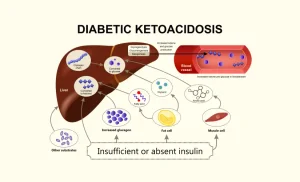
Blood sugar level – When insulin is insufficient, sugar cannot enter the cells, causing high blood sugar (hyperglycemia). As the body breaks down fat and protein for energy, blood sugar continues to rise.
-
Ketone level – The breakdown of fat and protein releases ketones, acidic compounds that enter the bloodstream.
-
Blood acidity – Excess ketones make the blood acidic, affecting the normal function of many organs.
Other tests
Additional tests help determine the cause and any related health concerns. These may include:
-
Blood electrolyte tests
-
Urinalysis
-
Chest X-ray
-
Electrocardiogram (ECG) to check heart function
Treatment
People diagnosed with diabetic ketoacidosis usually need urgent medical care, often in an emergency room or hospital. Treatment focuses on correcting dehydration, restoring electrolytes, and reversing the high blood sugar and acid buildup.
Fluids
IV fluids replace the fluids lost due to frequent urination and dehydration. They also help lower blood sugar levels.
Electrolyte replacement
Electrolytes such as sodium, potassium, and chloride are essential for muscle, nerve, and heart function. Because insulin deficiency lowers these levels, IV electrolyte replacement helps restore balance and prevent complications.
Insulin therapy
Insulin reverses diabetic ketoacidosis by lowering blood sugar and stopping ketone production. It is usually given through an IV along with fluids and electrolytes. Once blood sugar drops to around 200 mg/dL (11.1 mmol/L) and acid levels normalize, patients can return to their regular insulin routine.
Preparing for your appointment
Diabetic ketoacidosis is a life-threatening emergency. If symptoms are mild, contact your healthcare provider immediately.
Call emergency services if:
-
You can’t reach your healthcare provider
-
Your symptoms are getting worse
-
You are experiencing severe symptoms
Questions your healthcare provider may ask
About your symptoms:
-
What symptoms are you experiencing?
-
When did they start, and are they getting worse?
-
Have you been diagnosed with diabetes?
-
What were your recent blood sugar and ketone readings?
-
Are you able to keep fluids down?
-
Do you have trouble breathing or chest pain?
About possible causes:
-
Have you had a recent illness or infection?
-
Have you been under unusual stress?
-
Have you consumed alcohol or used any drugs recently?
-
Have you been following your diabetes treatment plan?
-
How well controlled was your blood sugar before symptoms began?
This information helps your healthcare provider quickly determine the severity of the condition and the best course of treatment.
Advertisement
