
Overview
Diagnosis
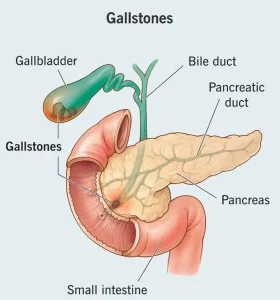
Diagnosing gallstones usually begins with a review of symptoms and imaging tests that help detect stones or related complications. Several tests and procedures are available to confirm the presence of gallstones and assess their impact on nearby organs.
Tests and procedures used to diagnose gallstones include:
-
Abdominal ultrasound
This is the most common test used to identify gallstones. During the procedure, a small handheld device called a transducer is moved across your abdomen. The transducer sends sound waves to a computer, creating detailed images of the structures within your abdomen. -
Endoscopic ultrasound (EUS)
EUS can help detect small gallstones that may not appear on a traditional abdominal ultrasound. During this procedure, a thin, flexible tube with a camera and ultrasound device is passed through the mouth and digestive tract. The ultrasound device produces high-frequency sound waves to create detailed images of the gallbladder and surrounding tissues. -
Other imaging tests
Additional imaging techniques may be used for a more accurate diagnosis, including:-
Oral cholecystography
-
Hepatobiliary iminodiacetic acid (HIDA) scan
-
Computerized tomography (CT) scan
-
Magnetic resonance cholangiopancreatography (MRCP)
-
Endoscopic retrograde cholangiopancreatography (ERCP)
If gallstones are found during ERCP, they can often be removed during the same procedure.
-
-
Blood tests
Blood work helps identify infections, jaundice, pancreatitis, or other complications linked to gallstones.
ERCP procedure
Endoscopic retrograde cholangiopancreatography (ERCP) is both a diagnostic and therapeutic procedure. It uses a special dye to highlight the bile ducts and pancreatic ducts on X-ray images. A flexible tube with a camera at the end is inserted through the mouth and guided down to the small intestine. Through this endoscope, a catheter delivers dye into the ducts, allowing doctors to view blockages or stones.
In some cases, gallstones found during ERCP can be removed immediately, making it a valuable tool for both diagnosis and treatment.
Treatment
Treatment for gallstones depends on whether they are causing symptoms. Many people with gallstones never experience discomfort or complications, so they do not require immediate treatment. If symptoms develop, treatment options focus on removing the stones or preventing further issues.
Common treatment options include:
-
Surgery to remove the gallbladder (cholecystectomy)
Surgery is the most common treatment for gallstones, particularly when they cause frequent or severe symptoms. The gallbladder is removed to prevent future stone formation. Once removed, bile flows directly from the liver to the small intestine instead of being stored in the gallbladder.
Living without a gallbladder generally does not affect digestion, though some people may experience temporary diarrhea after surgery. -
Medications to dissolve gallstones
In select cases, medications can help dissolve gallstones over time. These oral treatments may take months or years to work, and stones can recur if treatment is stopped. Because of limited effectiveness, this option is typically reserved for individuals who cannot undergo surgery.
Laparoscopic cholecystectomy
Laparoscopic cholecystectomy is a minimally invasive surgical procedure used to remove the gallbladder. It involves making small incisions in the abdomen to insert a tiny camera and specialized surgical instruments. The abdomen is gently inflated with carbon dioxide gas to provide space for the surgeon to operate.
This approach typically results in a faster recovery, less pain, and smaller scars compared to traditional open surgery.
Advertisement
