
Overview
Diagnosis
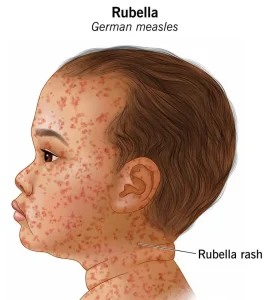
A rubella rash can look similar to many other viral rashes, so lab tests are often used to confirm the diagnosis. Your healthcare professional may take a virus culture or order a blood test. These tests can detect rubella antibodies in the blood, which helps show whether you’ve had a recent infection, a past infection or a rubella vaccine.
Treatment
There is no treatment that helps rubella clear up faster. Most symptoms are mild and may not need specific care. Healthcare professionals typically recommend staying away from others while infected, especially pregnant people. Avoid contact with others as soon as you suspect rubella and continue to do so until at least seven days after the rash disappears.
Care for an infant with congenital rubella syndrome depends on the severity of the condition. Infants with multiple complications may need early support from a team of specialists.
Self care
Simple self-care measures can help manage rubella symptoms. These may include:
-
Bed rest
-
Acetaminophen for relief from fever or body aches
Children and teenagers should not be given aspirin. In those recovering from viral illnesses such as the flu or chickenpox, aspirin has been linked to Reye’s syndrome, a rare but serious condition.
Preparing for your appointment
Before your appointment, write down any questions or concerns you want to discuss. Your healthcare professional may ask questions such as:
-
Have you been vaccinated for rubella?
-
How long have you had symptoms like a rash or aching joints?
-
Have you had contact with anyone who has rubella?
-
Have you traveled to other countries recently?
-
Does anything make your symptoms better?
-
Does anything make your symptoms worse?
When you arrive for your appointment, let the check-in staff know that you suspect an infectious disease. You may be asked to wear a face mask or be taken directly to an exam room for safety.
Advertisement
