
Overview
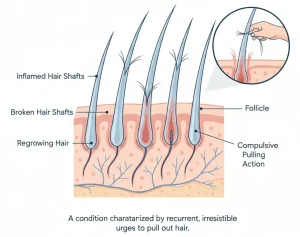
Diagnosis
To diagnose trichotillomania, your healthcare professional will typically start with a physical exam. You may then be referred to a mental health professional experienced in treating this condition. Diagnosis may include:
• Examining your hair loss.
• Checking for possible medical causes of hair loss, which may involve lab tests.
• Discussing your hair-pulling behaviors and emotions related to them.
• Identifying any physical or mental health conditions that may occur alongside hair pulling.
Treatment
Treatment options can help many people reduce or stop hair pulling. Approaches include therapy and, in some cases, medication.
Therapy
Therapies that may be helpful for trichotillomania include:
• Habit reversal training – This behavioral therapy teaches you to recognize situations where you are likely to pull hair and to substitute other behaviors. One method, called decoupling, involves quickly redirecting your hand away from your hair when you feel the urge.
• Acceptance and commitment therapy – Helps you accept hair-pulling urges without acting on them.
• Cognitive therapy – Helps you identify and challenge unrealistic beliefs about hair pulling and develop healthier thought patterns.
• Treatment for co-occurring conditions – Therapies that address anxiety, depression, or substance use issues may be important as part of the overall treatment plan.
Medicines
No medicines are specifically approved by the U.S. Food and Drug Administration for trichotillomania, but some may help manage symptoms such as anxiety or depression. Options may include:
• Antidepressants such as clomipramine.
• N-acetylcysteine, an amino acid that can affect mood.
• Olanzapine, used for certain serious mental health conditions.
Discuss any medications with your healthcare provider to weigh potential benefits against possible side effects.
Advertisement
