
Overview
Diagnosis
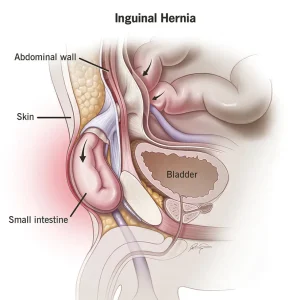
Diagnosis of an inguinal hernia is usually made through a physical examination. A healthcare professional checks for a visible or palpable bulge in the groin area. Because a hernia often becomes more noticeable when pressure increases, you may be asked to stand, cough or strain during the exam.
If the hernia is not easily seen or felt, imaging tests may be used. These can include abdominal ultrasound, CT scan or MRI to confirm the diagnosis.
Treatment
Treatment depends on the size of the hernia and the severity of symptoms. If the hernia is small and not causing discomfort, watchful waiting may be recommended. Wearing a supportive truss can sometimes help relieve symptoms, but it must be properly fitted and used under professional guidance.
In children, manual pressure may be used to gently push the hernia back into place. However, hernias that are painful or increasing in size typically require surgery to prevent complications.
Open Hernia Repair
In open hernia repair, the surgeon makes a single incision in the groin. The protruding tissue is moved back into the abdomen, and the weakened area is repaired. This may involve reinforcement with synthetic mesh, a technique known as hernioplasty. The incision is closed using stitches, staples or surgical glue.
Open repair can be performed using local anesthesia with sedation or general anesthesia. After surgery, walking is usually encouraged, but returning to normal activities may take several weeks.
Minimally Invasive Hernia Repair
Minimally invasive repair is performed using several small incisions in the abdomen and requires general anesthesia. The surgeon may use laparoscopic or robotic techniques. Gas is used to gently expand the abdomen, allowing for better visibility.
A laparoscope with a small camera is inserted through one incision, while surgical instruments are inserted through the others. The hernia is repaired with synthetic mesh, similar to open surgery.
This technique often leads to less discomfort, smaller scars and a faster recovery. It may be especially helpful for people with recurrent hernias or hernias on both sides of the body. Despite the differences in technique, long-term outcomes are similar to open repair.
After minimally invasive surgery, it may still take a few weeks before full activity can be resumed.
Advertisement
