
Overview
Diagnosis
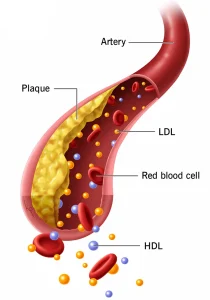
Diagnosis of high cholesterol involves steps your healthcare professional takes to determine your cholesterol levels. A blood test called a lipid panel or lipid profile measures the amount of cholesterol and triglycerides in your blood. The test results usually include:
-
Total cholesterol
-
Low-density lipoprotein (LDL) cholesterol
-
High-density lipoprotein (HDL) cholesterol
-
Triglycerides
For accurate results, fasting for 9 to 12 hours is often recommended before the test, although some newer cholesterol tests may not require fasting. Follow your healthcare professional’s instructions.
Interpreting the numbers
Cholesterol levels are measured in milligrams per deciliter (mg/dL) in the United States and in millimoles per liter (mmol/L) in Canada and Europe. The general interpretation of results is:
Total cholesterol
-
Below 200 mg/dL (Below 5.2 mmol/L): Desirable
-
200–239 mg/dL (5.2–6.2 mmol/L): Borderline high
-
240 mg/dL and above (Above 6.2 mmol/L): High
LDL cholesterol
-
Below 70 mg/dL (Below 1.8 mmol/L): Desirable for people with coronary artery disease or other high-risk conditions
-
Below 100 mg/dL (Below 2.6 mmol/L): Optimal for healthy people
-
100–129 mg/dL (2.6–3.3 mmol/L): Near optimal for healthy individuals, high for those with heart disease
-
130–159 mg/dL (3.4–4.1 mmol/L): Borderline high
-
160–189 mg/dL (4.1–4.9 mmol/L): High
-
190 mg/dL and above (Above 4.9 mmol/L): Very high
HDL cholesterol
-
Below 40 mg/dL (Below 1.0 mmol/L): Low for men
-
Below 50 mg/dL (Below 1.3 mmol/L): Low for women
-
40–59 mg/dL (1–1.5 mmol/L): Better
-
60 mg/dL and above (Above 1.5 mmol/L): Best
Triglycerides
-
Below 150 mg/dL (Below 1.7 mmol/L): Desirable
-
150–199 mg/dL (1.7–2.2 mmol/L): Borderline high
-
200–499 mg/dL (2.3–5.6 mmol/L): High
-
500 mg/dL and above (Above 5.6 mmol/L): Very high
Children and cholesterol testing
The American Heart Association recommends that children have cholesterol screening once between ages 9 and 11, and again between ages 17 and 21.
Screening may start earlier if the child:
-
Has a family history of high cholesterol, heart attack, or stroke
-
Has diabetes or obesity
-
Has other risk factors for heart disease
Treatment
Treatment for high cholesterol depends on your test results, overall health, and risk factors. The goal is to reach ideal cholesterol and triglyceride levels through a combination of lifestyle changes and, if needed, medication.
Common treatment options include:
-
Heart-healthy eating habits
-
Regular physical activity
-
Maintaining a healthy weight
-
Stopping smoking
-
Managing stress effectively
Your healthcare professional may also prescribe medications to help control cholesterol levels and reduce the risk of heart attack or stroke.
Common cholesterol medicines
Statins
Statins reduce cholesterol production in the liver and help remove cholesterol from the blood. Common statins include:
-
Atorvastatin
-
Fluvastatin
-
Lovastatin
-
Pitavastatin
-
Pravastatin
-
Rosuvastatin
-
Simvastatin
Cholesterol absorption inhibitors
Ezetimibe reduces the amount of cholesterol absorbed from food and can be used with statins for added benefit.
Bempedoic acid
This medicine works similarly to statins but may be prescribed if you experience side effects from statins. It can also be combined with ezetimibe for better LDL reduction.
Bile acid sequestrants
These medicines help the liver use excess cholesterol to make bile acids, reducing cholesterol levels. Examples include cholestyramine, colesevelam, and colestipol.
PCSK9 inhibitors
These injectable medicines, such as alirocumab, evolocumab, or inclisiran, help the liver absorb more LDL cholesterol. They are usually prescribed for people with genetic conditions or those who cannot achieve target cholesterol levels with other medicines.
Medicines for high triglycerides
If triglycerides are high, treatment may include:
-
Fibrates such as fenofibrate or gemfibrozil, which speed up triglyceride removal from the blood
-
Niacin, which limits cholesterol production in the liver (used only when statins are not tolerated)
-
Omega-3 fatty acids, which can lower triglycerides and are available by prescription or as supplements
Medicine side effects
Let your healthcare professional know if you experience side effects such as:
-
Muscle pain
-
Muscle damage (rare)
-
Increased blood sugar
Liver function tests may be recommended to monitor medication effects.
Children and cholesterol treatment
For children aged 2 and older, lifestyle changes—such as eating a healthy diet and being active—are usually the first approach.
If cholesterol levels remain very high, especially in children aged 10 and above, statins or other cholesterol-lowering medications may be considered under medical supervision.
Managing cholesterol effectively requires regular monitoring, adherence to lifestyle changes, and working closely with your healthcare team to prevent long-term heart health complications.
Advertisement
