
Overview
Diagnosis
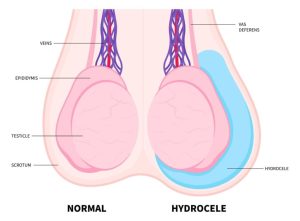
Diagnosis of a hydrocele usually begins with a physical examination by a healthcare provider. The exam helps determine the cause of the swelling and rule out other possible conditions.
During the physical exam, the provider may:
-
Check for pain or tenderness in an enlarged scrotum.
-
Press on the abdomen and scrotum to see if an inguinal hernia is present.
-
Shine a light through the scrotum, a process called transillumination. If a hydrocele is present, light passes through and reveals clear fluid surrounding the testicle.
Additional tests may include:
-
Blood and urine tests to detect signs of infection.
-
Ultrasound imaging to check for hernia, tumor, or other causes of scrotal swelling.
Other imaging tests such as CT scans or MRI may be done if needed to confirm the diagnosis or rule out other medical conditions.
Treatment
In infants, a hydrocele often resolves on its own within the first year of life. However, regardless of age, it is important to have a healthcare provider examine the condition to ensure there are no underlying issues with the testicles.
If the hydrocele does not go away naturally, surgery may be necessary to remove it.
Surgical treatment
Hydrocele removal surgery, called hydrocelectomy, is usually performed under anesthesia. In some cases, it can be done as an outpatient procedure, meaning hospital stay is not required.
During the operation, the surgeon makes a small incision in the scrotum or lower abdomen to drain and remove the hydrocele. If a hydrocele is discovered during surgery for an inguinal hernia, the surgeon may remove it at the same time, even if it isn’t causing discomfort.
After surgery, patients may have:
-
A drainage tube for a few days to remove excess fluid.
-
A supportive or bulky bandage on the surgical site.
-
A follow-up exam to ensure proper healing and check for recurrence, as hydroceles can occasionally return.
Most people recover quickly and can resume normal activities within a short period following the procedure.
Request an appointment
Advertisement
