
Overview
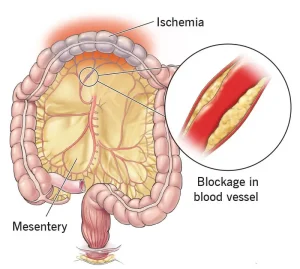
Diagnosis
Diagnosis of intestinal ischemia involves determining how well blood is flowing to the digestive tract and identifying any blockages or damaged areas. After a physical exam, your healthcare professional may order several tests depending on your symptoms.
Blood tests may suggest intestinal ischemia when results such as a high white blood cell count are present, although bloodwork alone cannot confirm the diagnosis.
Imaging tests are commonly used to view internal organs and rule out other causes of symptoms. These may include X-rays, ultrasound, CT scans or MRI scans. Specialized CT or MRI angiography can show blood flow through veins and arteries, helping identify narrowed or blocked vessels.
To examine the inside of the digestive tract, a flexible scope with a camera may be used. A sigmoidoscopy views the last part of the colon, while a colonoscopy allows examination of the entire colon.
Angiography provides a detailed look at blood flow in the intestinal arteries. A catheter is inserted into an artery, and contrast dye is injected to highlight areas of narrowing or blockage. During this test, treatment such as clot removal or artery widening can sometimes be performed.
In more serious situations, surgery may be needed to identify and remove damaged tissue. Opening the abdomen allows diagnosis and treatment in a single procedure.
Treatment
Treatment for intestinal ischemia focuses on restoring proper blood flow to the digestive tract. The approach depends on the cause, severity and type of ischemia.
Colon ischemia may be managed with antibiotics to prevent or treat infection. Other medical conditions such as heart failure or irregular heartbeat must be addressed. You may need to stop taking medicines that narrow blood vessels. Most cases improve without surgery, but severe damage may require removing dead tissue or bypassing a blocked artery. During angiography, narrowed arteries may be widened with angioplasty or kept open with a stent. Blood clots may also be removed or dissolved.
Acute mesenteric artery ischemia often requires urgent surgery to remove blood clots, bypass blocked arteries or repair damaged intestinal tissue. Treatment may also include antibiotics and medicines that prevent or dissolve clots or widen blood vessels. Angiography may allow procedures such as balloon widening or stent placement during diagnosis.
Chronic mesenteric artery ischemia treatment aims to restore long-term blood flow. Blocked arteries may be bypassed surgically, or narrowed arteries widened with angioplasty or treated with stent placement.
Ischemia caused by mesenteric venous thrombosis may be treated with anticoagulant medicines for several months if no intestinal damage is seen. Procedures to remove a clot may be needed in some cases. If part of the intestine is damaged, surgery may be required. People with a long-term clotting disorder may need lifelong anticoagulant therapy.
Advertisement
