
Overview
Diagnosis
To diagnose Klinefelter syndrome, a healthcare professional begins with a physical exam and questions about symptoms, development, and overall health. This may include examining the genital area and chest, and discussing developmental milestones and functioning.
The main tests used for diagnosis include:
-
Hormone testing: Blood tests identify changes in hormone levels that may indicate Klinefelter syndrome.
-
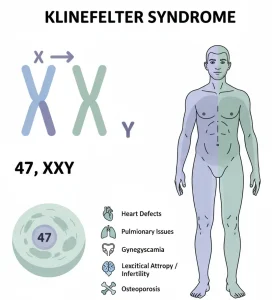
Chromosome analysis (karyotype): A blood sample is examined in the lab to check the number and structure of chromosomes, confirming the presence of an extra X chromosome.
Sometimes, Klinefelter syndrome is diagnosed before birth. Prenatal testing for other reasons may reveal the condition. This can happen during procedures that examine fetal cells from the amniotic fluid or placenta. These tests are often offered to pregnant people who are age 35 or older or who have a family history of genetic conditions.
Klinefelter syndrome also may be suspected during noninvasive prenatal screening, which looks at cell-free DNA in the pregnant person’s blood. If the screening suggests a possible diagnosis, more-invasive testing is needed to confirm it.
Treatment
When Klinefelter syndrome is diagnosed, care is often provided by a team of specialists. This may include an endocrinologist, pediatrician, speech therapist, physical therapist, genetic counselor, fertility specialist, and mental health professional. While the chromosome changes cannot be reversed, treatment can significantly reduce symptoms and improve quality of life. Early diagnosis offers the greatest benefit, but treatment at any age can be helpful.
Treatment options include:
-
Testosterone therapy: Usually started around the time of expected puberty, testosterone can support typical pubertal changes such as a deeper voice, increased muscle mass, facial and body hair, and sexual desire. It may also support bone density and improve mood, concentration, and energy levels. However, testosterone therapy does not correct fertility issues.
-
Breast tissue removal: If extra breast tissue develops, plastic surgery can remove it if desired.
-
Therapy services: Speech and language therapy may help with communication. Physical therapy can improve strength and coordination. Occupational therapy can assist with daily functioning, social skills, and vocational abilities.
-
Educational evaluation and support: Learning challenges or social difficulties may require school-based services. Families can work with teachers, counselors, or school nurses to identify appropriate support plans.
-
Fertility treatment: Most people with Klinefelter syndrome experience reduced fertility due to low or absent sperm production. For those who produce small amounts of sperm, intracytoplasmic sperm injection (ICSI) may help. In this procedure, sperm is collected from the testicle using a biopsy needle and injected directly into an egg.
-
Mental health support: Emotional challenges can arise, especially during puberty or when coping with infertility. Counseling or therapy can help individuals and families manage stress, emotions, and long-term adjustment.
Request an appointment
Advertisement
