
Overview
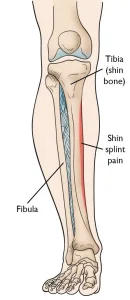
Diagnosis
Shin splints are typically diagnosed based on a review of your medical history and a physical examination. In some cases, an X-ray or other imaging studies may be used to rule out other causes of shin pain, such as a stress fracture.
Treatment
Shin splints can often be managed with simple self-care measures:
-
Rest
Avoid activities that cause pain, swelling, or discomfort. Maintain movement with low-impact exercises such as swimming, bicycling, or water running while healing. -
Ice
Apply ice packs to the affected area for 15 to 20 minutes, 3 to 4 times a day for several days. Wrap the ice pack in a thin towel to protect your skin. -
Over-the-counter pain relievers
Medications such as ibuprofen (Advil, Motrin IB), naproxen sodium (Aleve), or acetaminophen (Tylenol) can help reduce pain. -
Gradual return to activity
Resume your usual activities slowly once the pain has subsided.
Advertisement
