
Overview
Diagnosis
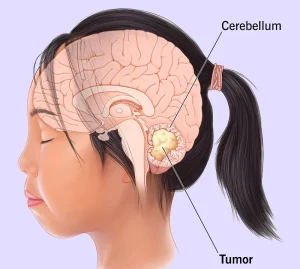
The diagnosis of medulloblastoma usually begins with a detailed review of medical history and a discussion of signs and symptoms. Several tests and procedures may be used to confirm the diagnosis and understand how the tumor is affecting the brain.
A neurological exam is commonly performed to assess vision, hearing, balance, coordination and reflexes. Changes in these functions can help identify which part of the brain may be involved.
Imaging tests are essential in diagnosing medulloblastoma. These tests create detailed images of the brain and help determine the size, location and extent of the tumor. Imaging may also show whether the tumor is causing pressure changes or blocking the flow of cerebrospinal fluid. CT scans and MRI scans are most commonly used, though additional imaging may be required in specific situations.
Tissue sample testing may be done in selected cases. A biopsy involves removing a small sample of tumor tissue for laboratory analysis. Biopsies are uncommon for medulloblastoma but may be used when the diagnosis is unclear. During this procedure, part of the skull is opened and a needle is guided into the tumor to collect a sample, which is then examined to confirm the tumor type.
Cerebrospinal fluid testing is another diagnostic step. This is done through a spinal tap, also known as a lumbar puncture, where a needle is inserted into the lower spine to collect cerebrospinal fluid. The fluid is tested for the presence of tumor cells. This test is only performed after pressure inside the brain has been controlled or the tumor has been removed, as doing it earlier could be unsafe.
Treatment
Treatment for medulloblastoma most often involves a combination of therapies. The usual approach includes surgery followed by radiation therapy, chemotherapy or both. The treatment plan is carefully tailored based on several factors, including the tumor’s size, location and growth rate, whether it has spread within the brain or spinal cord, results of tumor cell analysis, the patient’s age and overall health.
Surgery may be done to relieve fluid buildup in the brain. Medulloblastoma can block the normal flow of cerebrospinal fluid, leading to increased pressure in the brain. To reduce this pressure, a surgeon may create a new pathway for fluid drainage. In some cases, this procedure is performed at the same time as tumor removal.
Surgery to remove the medulloblastoma is usually the main treatment step. The goal is to remove as much of the tumor as possible. Complete removal is not always possible because the tumor may be located near critical brain structures. Even after surgery, most people require additional treatments to destroy remaining cancer cells.
Radiation therapy is often used after surgery. This treatment uses high-energy beams to target and kill cancer cells. The energy may come from X-rays, protons or other sources. Radiation is carefully directed to specific areas to limit damage to healthy brain tissue.
Chemotherapy involves the use of medicines to kill cancer cells. These medicines are usually given through a vein. Chemotherapy may be used after surgery, after radiation therapy or at the same time as radiation, depending on the treatment plan and patient factors.
Clinical trials may also be an option for some people. These studies test new treatments or new ways of combining or timing current treatments such as radiation and chemotherapy. Clinical trials offer access to emerging therapies, though potential risks and side effects may not be fully known. A healthcare professional can help determine whether a clinical trial is appropriate.
Advertisement
