
Overview
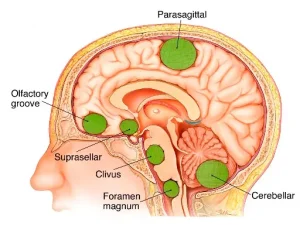
Diagnosis
Meningiomas can be difficult to diagnose because they often grow slowly and cause subtle symptoms that may be mistaken for other health conditions or signs of aging.
If a meningioma is suspected, a neurologist, a doctor specializing in brain and spine conditions, will conduct a thorough evaluation. Diagnostic steps may include:
-
Neurological exam to assess brain and nerve function
-
Imaging tests with contrast dye:
-
CT scan, which uses X-rays to create cross-sectional images of the brain
-
MRI scan, which uses magnets and radio waves to produce detailed images of brain structures and tumors
-
-
Biopsy, in some cases, to examine a sample of the tumor and confirm a meningioma or rule out other tumors
Treatment
Treatment depends on factors such as tumor size, location, growth rate, age, overall health, and personal goals.
Wait-and-see approach
Not all meningiomas require immediate treatment. Small, slow-growing tumors that do not cause symptoms may be monitored with periodic brain scans to check for growth.
Surgery
Surgery may be recommended if the meningioma is causing symptoms or shows signs of growth.
-
Surgeons aim to remove the entire tumor, though complete removal may not always be possible if it is near delicate brain or spinal structures
-
Post-surgery treatment depends on remaining tumor tissue:
-
No visible tumor: follow-up scans only
-
Small benign remnants: follow-up scans or stereotactic radiosurgery
-
Irregular or malignant tumors: radiation therapy
-
-
Surgery risks include infection, bleeding, and possible damage to nearby structures, such as vision loss if the optic nerve is involved
Radiation therapy
Radiation therapy may be used when complete surgical removal is not possible or to treat residual tumor cells. Techniques include:
-
Stereotactic radiosurgery (SRS), which targets high-powered beams precisely without incisions, often as outpatient treatment
-
Fractionated stereotactic radiotherapy (SRT), delivering smaller doses over multiple sessions
-
Intensity-modulated radiation therapy (IMRT), using computer software to minimize radiation to healthy tissue
-
Proton beam radiation, directing radioactive protons at the tumor to limit damage to surrounding tissue
Medicines
Chemotherapy is rarely used for meningiomas but may be considered if the tumor does not respond to surgery or radiation. Research into targeted therapies is ongoing.
Advertisement
