
Overview
Diagnosis
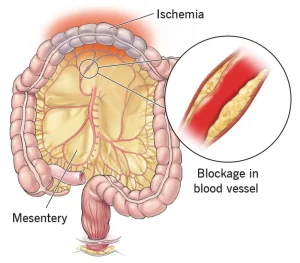
If you experience pain after eating that leads you to avoid food and results in weight loss, a healthcare professional may suspect chronic mesenteric ischemia. This condition occurs when blood flow to the small intestine is reduced, usually due to narrowed arteries.
Confirming the diagnosis involves identifying narrowing or blockages in the main arteries that supply blood to the small intestine.
Tests used to diagnose mesenteric ischemia may include:
-
Angiography
Imaging tests such as a CT scan, MRI or X-ray of the abdomen may be used to examine the arteries supplying the small intestine. A contrast dye is often injected during the scan to help clearly identify areas where the arteries have narrowed or become blocked. -
Doppler ultrasound
This noninvasive test uses sound waves to measure blood flow through the arteries. It can help detect reduced blood flow and narrowing of the vessels that supply the intestines.
Treatment
Treatment for mesenteric ischemia depends on how quickly the condition develops and the severity of blood flow restriction.
If a blood clot causes a sudden and severe reduction in blood flow to the small intestine, immediate surgery may be necessary. Prompt treatment is critical to prevent serious intestinal damage.
Mesenteric ischemia that develops gradually over time may be treated with angioplasty. This procedure uses a small balloon to widen the narrowed artery and improve blood flow. In some cases, a stent, which is a small mesh tube, is placed inside the artery to keep it open.
In other situations, mesenteric ischemia may require open surgery. This involves making an incision in the abdomen to directly repair or bypass the blocked artery and restore adequate blood flow to the small intestine.
Advertisement
